Standards
Confined Space: What It Is, Risks, and the Requirements of the Updated NR-33
Understand what a confined space is, the main operational risks, and the requirements of the latest update to NR-33.
By: Willian Candelório
Understand what a confined space is, the main operational risks, and the requirements of the latest update to NR-33.
By: Willian Candelório
Work in confined spaces is one of the activities with the highest lethality rate in industry. Unlike other occupational risks, where a mistake can cause an injury, a failure in assessing the atmosphere or in rescuing from a confined space usually results in multiple fatalities — affecting both the worker inside the environment and the one attempting to rescue them without proper preparation.
To mitigate these risks, the standard regulating this activity underwent its last update through Portaria MTP No. 1,690, published on June 15, 2022, and coming into force on October 03, 2022. Understanding the requirements of this updated version of NR-33 is critical not only to ensure legal compliance in audits, but also to ensure that release and rescue procedures actually work in operational practice.
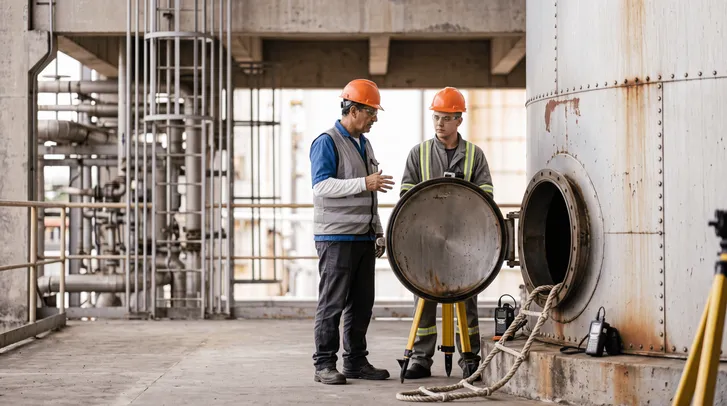
Many professionals mistake "confined space" simply for small or tight places. However, NR-33 has an exact technical definition.
For any area or environment to be considered a confined space, it must simultaneously meet three requirements:
In addition to these conditions, the standard defines that spaces not intended for human occupancy, with limited means of entry and exit, which are used for storing material with the potential to engulf or drown the worker, are also categorized as confined spaces.
The greatest danger of a confined space is that many of its risks are invisible and odorless. The safety team and authorized workers constantly deal with lethal threats, the main ones described by the standard being:
The latest update of NR-33 brought important alignments to integrate the management of confined spaces into modern occupational risk management standards.
If your company still operates with old manuals, pay attention to the main requirements in force:
The Entry and Work Permit (PET) is the document certifying that all safety measures have been adopted (such as hazardous energy isolation and initial atmospheric assessments).
The major problem for industries is that issuing a PET on paper forms often stalls operations. The supervisor wastes time collecting physical signatures in the field, gas detector test results must be transcribed by hand, and validating the worker's ASO (Occupational Health Certificate) and training often depends on time-consuming HR queries. In case of failure in this manual verification, the company assumes all civil and criminal risks of the operation.
Occupational safety management is interconnected and requires constant technical updates. Deepen your knowledge by accessing our other content about NRs:
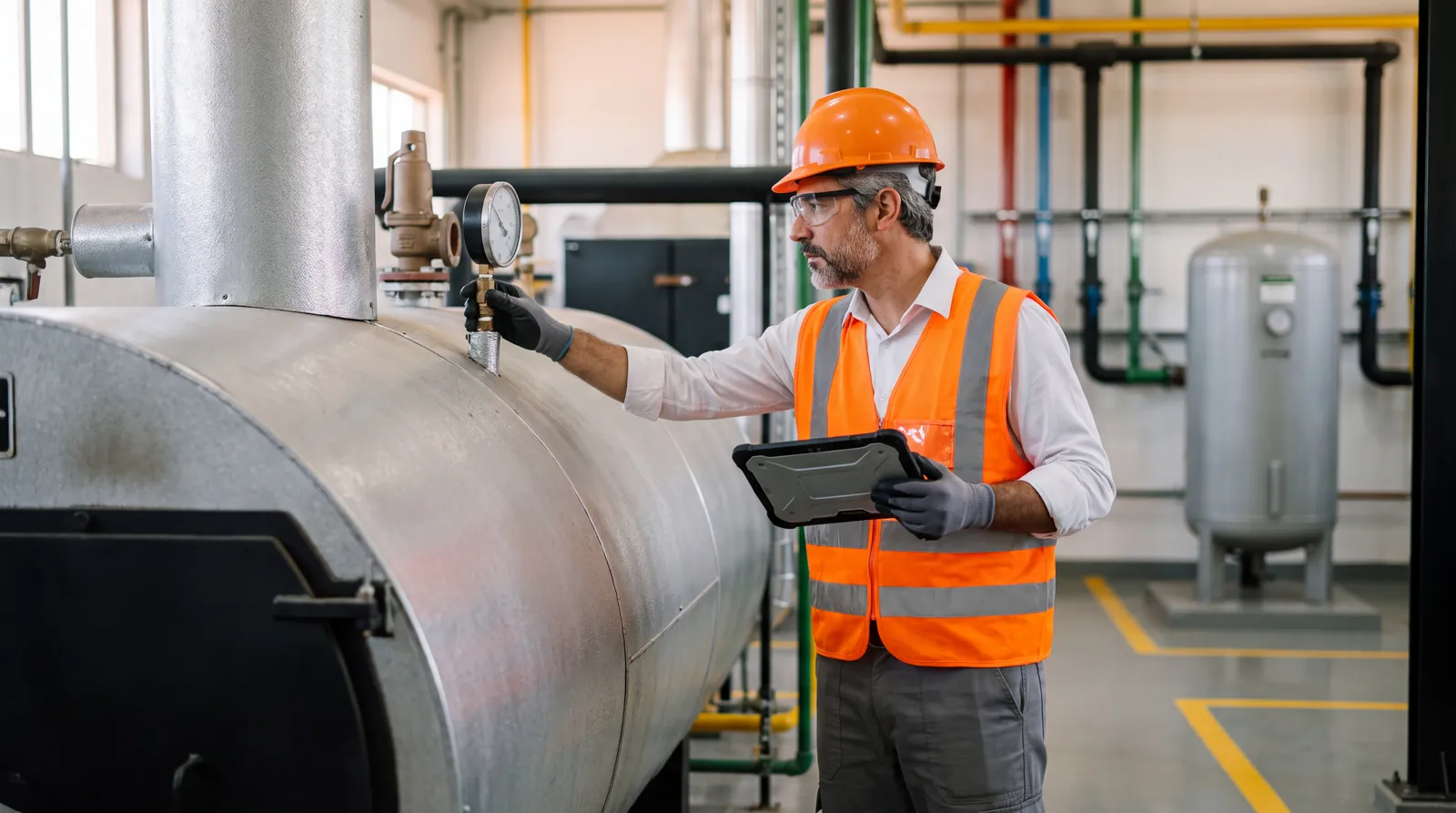
Find out what NR 13 establishes, why safety inspections of boilers and pressure vessels matter, and the role of the Qualified Professional (PH).
Understand the NR 11 rules for safe transport, handling, storage and manipulation of materials with forklifts, overhead cranes and cranes.
Understand what the updated NR 9 is, how it governs the assessment of physical, chemical and biological agents, and its direct link with the PGR (NR 1).
Get to know NR 8 and understand the technical requirements for ensuring the safety, thermal comfort and structural stability of buildings used as workplaces.
Understand what NR 6 is, the employer's responsibilities when issuing PPE, the worker's duties and how to streamline PPE control in your company.
Understand what NR 5 is, its sizing rules, the election process deadlines and the standard's new requirements on combating harassment in companies.
Simplify your Risk Management, reducing liabilities and ensuring safe, standardized, and auditable operations with fast implementation and advisory support.