Standards
Updated NR-6: what the Standard establishes about PPEs

Understand the importance of NR-6, what it establishes regarding PPE, and see the main points of the updated standard
By: Willian Candelório
Understand the importance of NR-6, what it establishes regarding PPE, and see the main points of the updated standard
By: Willian Candelório
Occupational safety is built upon fundamental pillars, and when it comes to the direct physical protection of the worker, NR-6 plays a central role. This Regulatory Standard defines the technical and legal rules for the approval, commercialization, supply, and use of Personal Protective Equipment.
But do you know exactly what NR-6 is in its most recent version and what its real importance is for your company's risk management? In this article, we detail the crucial points of the standard to keep your management in compliance.
Directly speaking, NR-6 establishes that Personal Protective Equipment or PPE is considered to be any device or product, for individual use by the worker, designed and manufactured to offer protection against occupational risks existing in the work environment.
The standard determines that PPE, whether domestically manufactured or imported, can only be offered for sale or used with the indication of the Certificate of Approval (CA), issued by the competent national body in matters of safety and health at work.
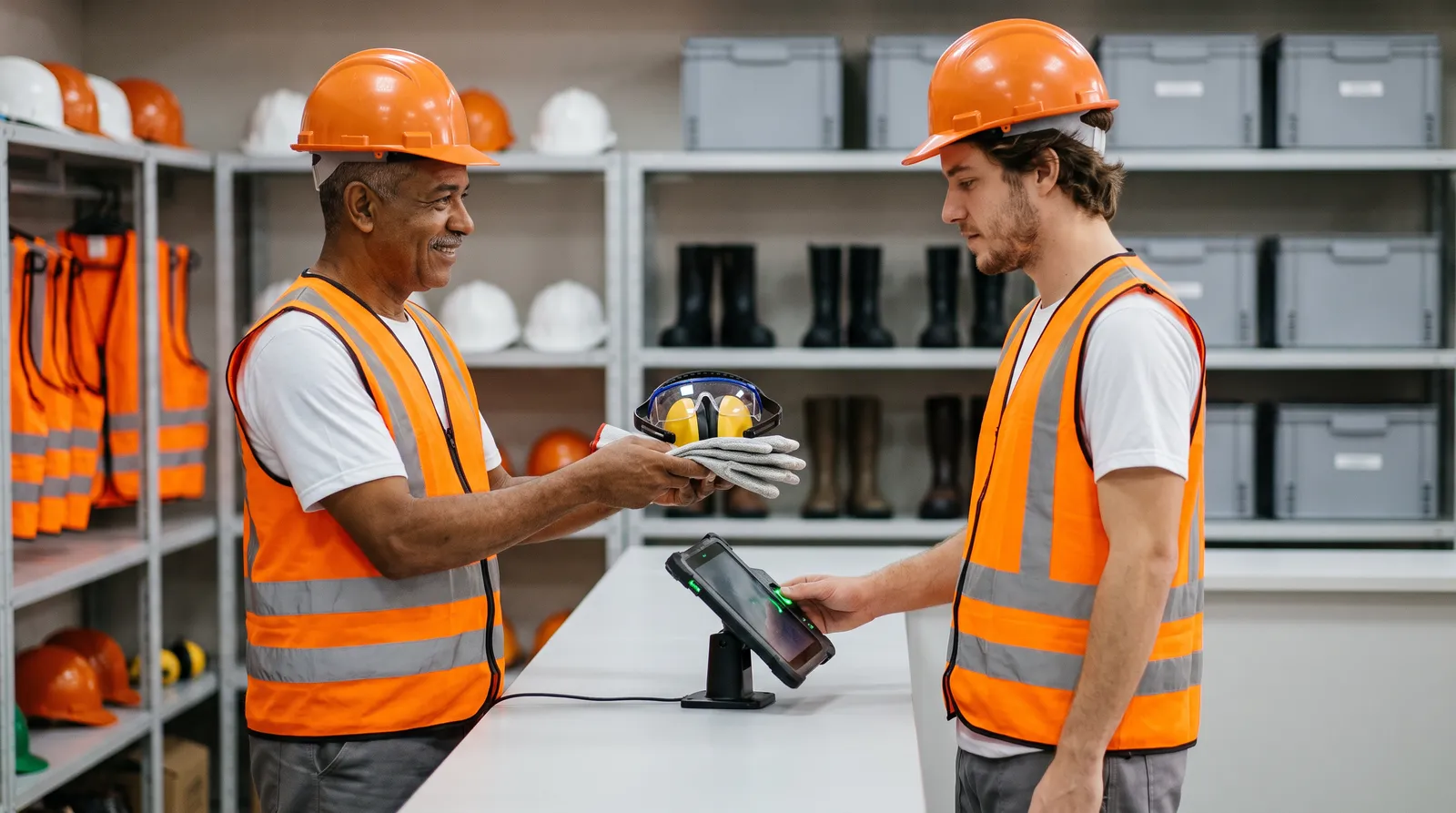
In addition, NR-6 establishes a clear obligation for the organization: to provide employees, free of charge, with PPE adequate to the risk, in perfect condition of conservation and operation, in the following circumstances:
The relevance of NR-6 goes far beyond the simple obligation to deliver a helmet or a glove. It is the legal instrument that guarantees the effectiveness of the protection offered.
Guarantee of Quality and Effectiveness: By requiring the Certificate of Approval (CA), the standard ensures that the equipment has been tested and approved to protect against that specific risk. Without NR-6, companies could purchase equipment without technical proof of safety.
Clear Definition of Responsibilities: The standard is vital because it establishes mutual duties. It defines that it is up to the employer not only to provide, but to require the use of and to guide/train the worker. On the other hand, it defines that it is the employee's duty to use the PPE only for the purpose for which it is intended and to be responsible for its safekeeping and conservation.
Reduction of Accidents and Illnesses: Ultimately, the rigorous application of NR-6 is essential to reduce the number of occupational accidents and occupational diseases in Brazil, acting as the last line of defense between the worker and danger.
The scope of NR-6 goes beyond the basic relationship between employer and employee, involving the entire safety chain. The provisions of this standard apply to organizations that acquire PPE, to workers who use them, as well as to manufacturers and importers of PPE.
This means that responsibilities are shared:
Regardless of the sector — whether industry, commerce, services, or agribusiness —, if there is interaction with Personal Protective Equipment, NR-6 establishes clear guidelines for all these parties.
The standard classifies PPE according to the body part they protect (Annex I of NR-6). Knowing this list is essential for the correct selection of equipment. Below, we list the main examples of equipment covered by NR6:
NR-6 undergoes revisions to remain aligned with market needs and legal security. A recent point of attention concerns the integrity of the equipment certification process.
The amendment brought by MTE Ordinance No. 57, dated January 16, 2025, modified the item referring to the Certificate of Approval (CA), establishing an important prohibition for manufacturers and importers:
6.9.4 It is prohibited to transfer the use of the CA issued to a certain manufacturer or importer so that another manufacturer or importer may use it without undergoing the regular procedure for obtaining their own CA.
This update aims to ensure that each manufacturer or importer is directly responsible for the certification process of their product, preventing the shared use of CAs without due individual technical validation, which reinforces the safety and traceability of equipment available on the market.
Manually managing the validity of CAs, replacement deadlines, and the delivery record of PPE is a complex task that exposes the company to unnecessary risks. The use of specialized technology, such as the GAP solution, simplifies this process by automating inventory control and allowing digital recording of deliveries.
Find out what NR 13 establishes, why safety inspections of boilers and pressure vessels matter, and the role of the Qualified Professional (PH).
Understand the NR 11 rules for safe transport, handling, storage and manipulation of materials with forklifts, overhead cranes and cranes.
Understand what the updated NR 9 is, how it governs the assessment of physical, chemical and biological agents, and its direct link with the PGR (NR 1).
Get to know NR 8 and understand the technical requirements for ensuring the safety, thermal comfort and structural stability of buildings used as workplaces.
Understand what NR 6 is, the employer's responsibilities when issuing PPE, the worker's duties and how to streamline PPE control in your company.
Understand what NR 5 is, its sizing rules, the election process deadlines and the standard's new requirements on combating harassment in companies.
Simplify your Risk Management, reducing liabilities and ensuring safe, standardized, and auditable operations with fast implementation and advisory support.