Standards
What Is NR 25? Industrial Waste Management and Safety
Understand NR 25, the safety rules for handling, storing and disposing of industrial waste (solid, liquid and gaseous) and the occupational risk involved.
By: Vitória Willemann
Understand NR 25, the safety rules for handling, storing and disposing of industrial waste (solid, liquid and gaseous) and the occupational risk involved.
By: Vitória Willemann
Industrial processing inevitably generates unwanted by-products. Whether toxic gases released from chimneys, chemical effluents discharged into the sewer or piles of hazardous material scraps, mishandling this waste threatens both the environment and the direct health of the workers who handle it.
To bridge occupational hygiene and environmental protection, Brazil's Ministry of Labour and Employment relies on NR 25. This article details the standard's requirements for the control, packaging and safe disposal of industrial waste.
Regulatory Standard 25 (NR-25) covers the management of industrial waste and the preventive measures to be taken to protect workers' health and physical integrity.
The standard defines industrial waste as waste from industrial processes, in solid, liquid or gaseous form or a combination of these, that requires specific treatment. The fundamental premise of NR 25 is reduction at source: the text requires companies to seek, as a priority, to reduce waste generation by adopting the best available technological and organisational practices.
When waste generation is unavoidable, plant engineering must act to control it before it reaches workers or the environment:
Workers who operate effluent treatment plants (ETE, from the Portuguese Estação de Tratamento de Efluentes), chemical waste transfer areas or who handle production scraps are on the front line of risk.
NR 25 requires these employees to receive ongoing training on the risks involved in handling waste, the appropriate control measures and emergency response procedures in the event of leaks or accidental contact. Strict use of PPE (Personal Protective Equipment, known in Brazil as EPI) and personal hygiene procedures (no eating in the waste area, thorough cleaning) are central points of the training.
Environmental legislation (such as Brazil's National Solid Waste Policy and the resolutions of CONAMA, the National Environment Council) focuses on protecting the environment, water and soil. NR 25 (Ministry of Labour) focuses on protecting the workers who collect, transport, store and process this waste inside the plant. However, they work together: NR 25 requires the final disposal of waste to comply with environmental legislation, bringing the two spheres of inspection together.
NR 25 prohibits the release of gaseous contaminants into the workplace if they could compromise workers' safety and health. If there is a risk, the company must install exhaust and filtration systems directly on the machine that generates them (local exhaust ventilation) before the gas spreads through the building.
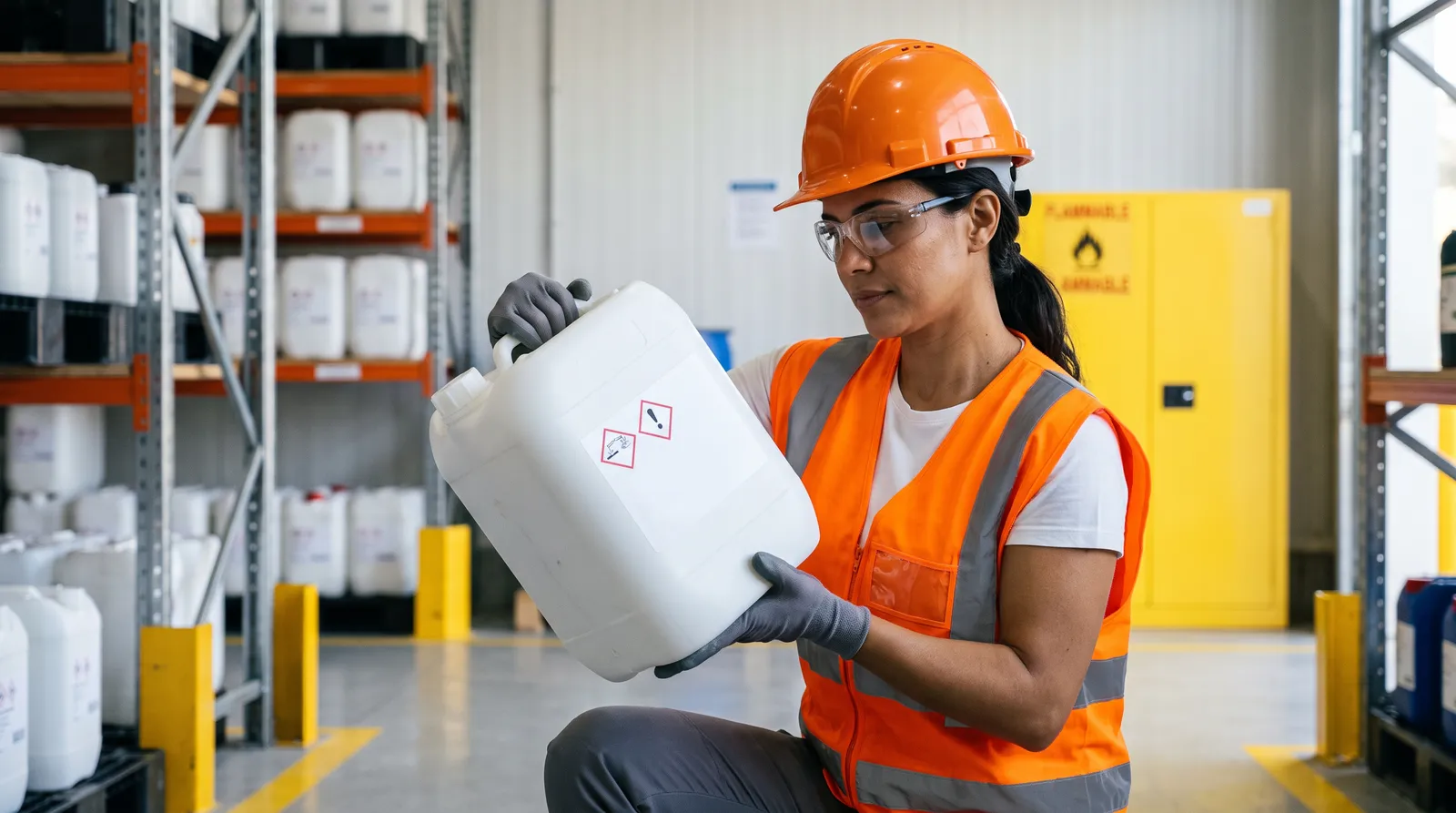
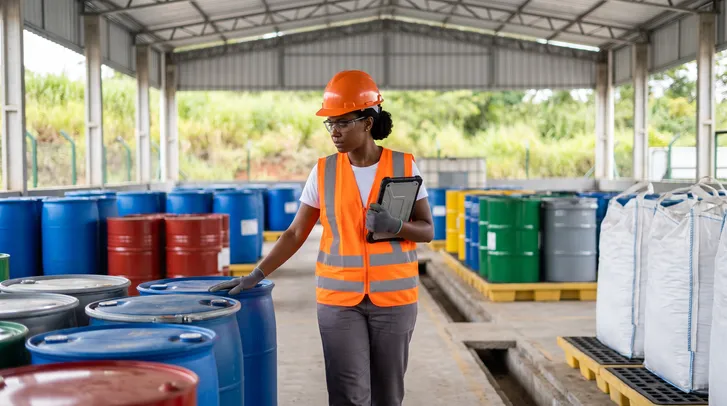
The standard requires highly toxic or hazardous solid and liquid waste to be stored using containers and processes that guarantee the material is completely isolated, preventing direct contact, leaks and gas emissions. These areas must have restricted access and be properly signposted.
Understand what NR 26 establishes, the official rules for safety signage, the use of the GHS in labelling and the preparation of the Safety Data Sheet.
Understand NR 22, the rules for mining in Brazil, how the CIPAMIN works and the requirements of the sector's Risk Management Programme (PGR).
Understand what NR 21 establishes, the requirements for protection against the weather, the rules on worker housing and how it relates to NRs 18 and 31.
Understand what NR 20 (updated in 2025) establishes, the rules for storing and handling flammables, the standard's Classes and the Facility File.
Understand what NR 19 establishes, the strict rules for manufacturing, handling and storing explosives, and the technical prohibitions updated by the MTE.
Understand what NR 16 is, which activities entitle workers to the 30% hazardous work allowance on their base salary and how the technical classification is done.
Simplify your Risk Management, reducing liabilities and ensuring safe, standardized, and auditable operations with fast implementation and advisory support.