Standards
What Is NR 21? Rules and Precautions for Outdoor Work
Understand what NR 21 establishes, the requirements for protection against the weather, the rules on worker housing and how it relates to NRs 18 and 31.
By: Vitória Willemann
Understand what NR 21 establishes, the requirements for protection against the weather, the rules on worker housing and how it relates to NRs 18 and 31.
By: Vitória Willemann
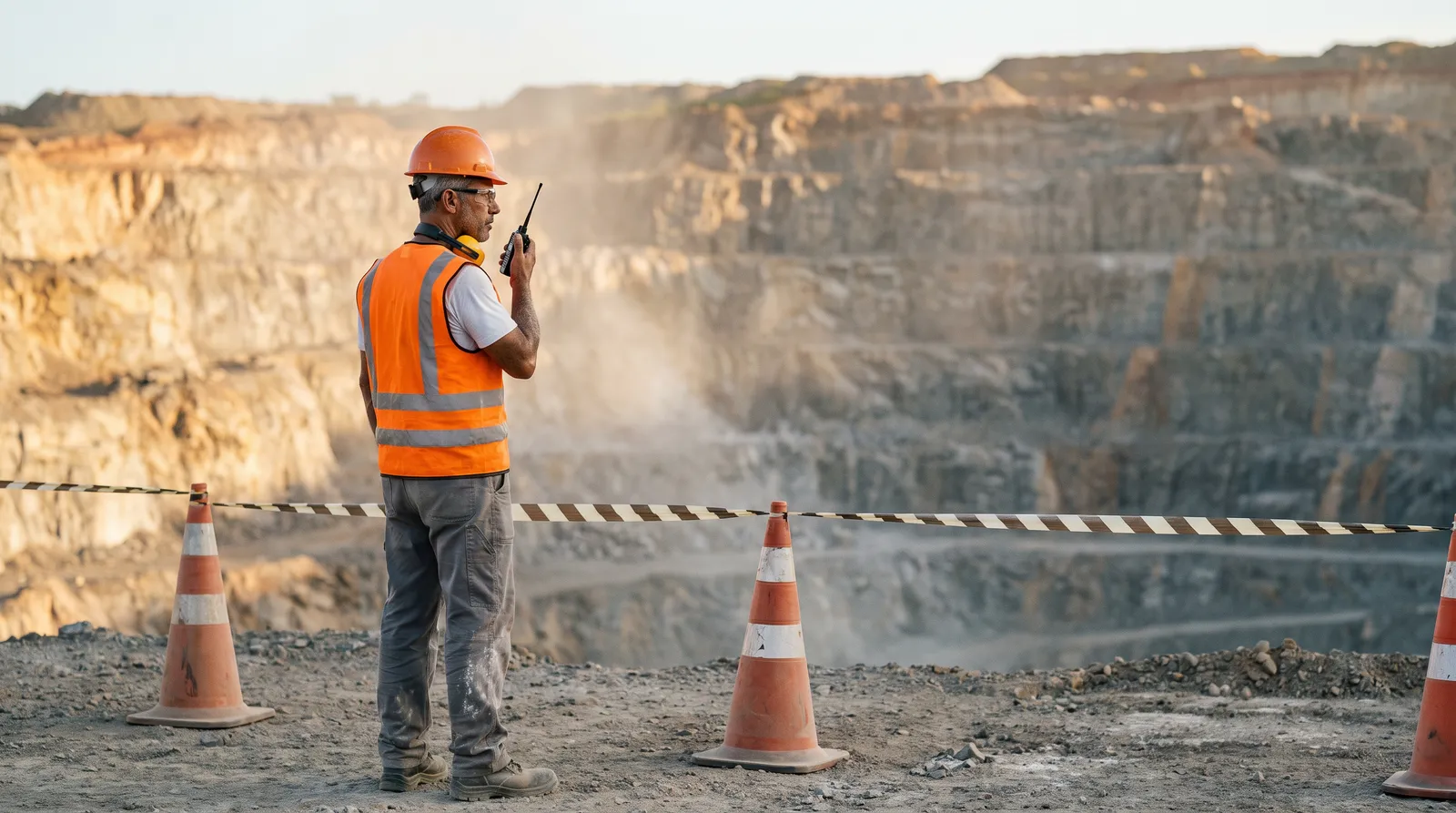
Activities carried out outside industrial buildings or offices pose unique challenges for Occupational Health and Safety (OHS) management. On work fronts, in mining, road maintenance and ports, workers are directly exposed to severe weather and often to limited sanitary conditions.
To ensure that companies protect the physical integrity and dignity of these professionals, Brazil's Ministry of Labour and Employment sets out NR 21. This article details the requirements of this standard and the structural obligations for protecting teams that work outdoors.
Regulatory Standard 21 (NR-21) sets the minimum safety, health and comfort guidelines for workers who carry out their activities outdoors.
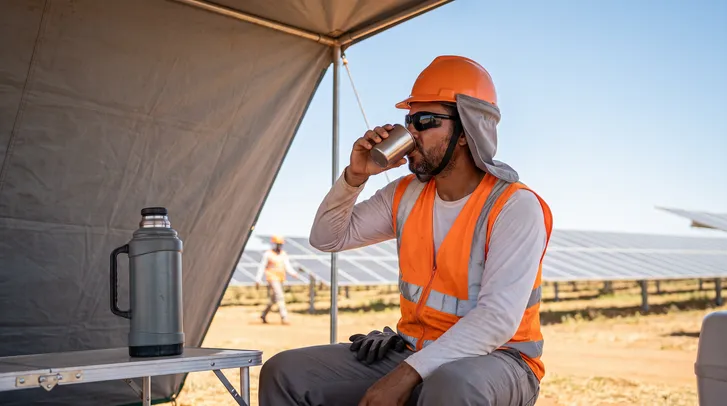
The most inspected requirement of the standard is protection against the weather. The legal text states that shelters, even rustic ones, capable of protecting workers from the elements are mandatory. In addition, the employer must take special measures to protect the team against excessive sun exposure, heat, cold, humidity and strong winds.
In practice, this means a company cannot keep a team working outdoors under scorching sun or heavy rain without providing a shelter close to the work front for breaks, hydration or extreme weather conditions.
Outdoor work often takes place in remote areas. NR 21 requires the company to actively look after preventive health and environmental hygiene.
Under the standard, the employer must adopt prophylactic measures against diseases endemic to the region, which includes raising team awareness, vector control and vaccination where public health guidelines call for it.
As for basic sanitation, the legislation states that work areas without a public sewage network must have suitable septic tanks. Disposing of waste in the open is strictly prohibited, to prevent outbreaks of infectious diseases. In addition, wells and water sources for the team's consumption must be rigorously protected against contamination.
In infrastructure projects and remote activities, it is common for the company to provide accommodation. NR 21 imposes structural rules for this housing, prohibiting collective living in substandard facilities.
Accommodation must offer adequate sanitary and architectural conditions. The standard requires:
A critical compliance point is knowing when to apply NR 21. As a general/special standard, it serves as the legal baseline. However, if outdoor work takes place in agriculture or civil construction, the SESMT (the company's Specialised Service in Safety Engineering and Occupational Medicine) must follow the hierarchy of the Sector Standards:
The legal rule is clear: the sector standard (specific to your industry) complements and takes precedence over the general standard.
To help with OHS management, we answer the most common questions about outdoor operations:
This is one of the biggest questions in the sector. Technically, sunscreen is not classified as Personal Protective Equipment (PPE, known in Brazil as EPI), because it does not have a Certificate of Approval (CA) issued by the MTE. However, the Labour Courts consider providing it mandatory in outdoor activities, based on NR 21 itself (which requires measures against excessive sun exposure). The SESMT should record the issue of sunscreen on dedicated control sheets, proving that preventive measures against skin cancer have been adopted.
Not directly. NR 21 sets the rules for protection and infrastructure. Payment of salary allowances is governed exclusively by NR 15 (Unhealthy Work Allowance). Exposure to sunlight alone does not qualify as unhealthy work due to non-ionising radiation (according to a precedent of the TST, Brazil's Superior Labour Court), but exposure to excessive heat caused by the sun may qualify for the allowance if the quantitative technical report proves that the NR 15 tolerance limits were exceeded.
The standard does not prescribe the construction material of a "rustic shelter". Inspectors interpret that the structure — even if temporary, mobile or simple (such as framed tents with UV protection or well-built kiosks) — must be sturdy enough not to collapse and fulfil its primary purpose: safely protecting the team from rain and intense sun during breaks.
Understand what NR 20 (updated in 2025) establishes, the rules for storing and handling flammables, the standard's Classes and the Facility File.
Understand what NR 19 establishes, the strict rules for manufacturing, handling and storing explosives, and the technical prohibitions updated by the MTE.
Understand what NR 16 is, which activities entitle workers to the 30% hazardous work allowance on their base salary and how the technical classification is done.
Understand what NR 15 is, the rules for classifying unhealthy activities, the allowance levels (10%, 20% and 40%) and how to neutralise these risks under MTE rules.
Understand what NR 14 is, the mandatory requirements for installing, lining and safely operating industrial furnaces, and how to avoid explosion risks.
Find out what NR 13 establishes, why safety inspections of boilers and pressure vessels matter, and the role of the Qualified Professional (PH).
Simplify your Risk Management, reducing liabilities and ensuring safe, standardized, and auditable operations with fast implementation and advisory support.