Content based on Brazil's General Data Protection Law (LGPD, Law No. 13,709/2018), consulted on 11/11/2026.
Visitor control is the process of recording who enters the company without working there, such as customers, suppliers attending meetings, auditors and job candidates. It defines who authorised the visit, which areas the person may access, who accompanies them and when they left. Because it involves personal data, registration must comply with the LGPD.
Visitor control at a glance
| Topic | What to consider |
|---|
| Who is a visitor | Anyone who enters without performing a service: customers, suppliers in meetings, auditors, candidates, delivery drivers |
| Difference from a contractor | A contractor performs a contracted service and needs documents and training; a visitor does not perform a service |
| Personal data | Registering a visitor is processing of personal data and must comply with the LGPD (Law No. 13,709/2018) |
| Photos and biometrics | Biometric data is sensitive personal data (LGPD, art. 5, II) and may only be processed in the cases set out in art. 11 |
| Safety during the visit | Visitors in operational areas need a safety briefing, PPE and an escort |
What is visitor control?
It is the set of rules the gate follows to receive people who do not work at the company. Good control answers five questions: who the person is, who invited them, where they are going, who is accompanying them and what time they left.
In offices, the focus is usually property security. In industry, occupational safety also comes into play: a visitor walking through the production area is exposed to the same risks as the people who work there.
What is the difference between a visitor and a contractor?
A contractor is a professional from a contracted company who will carry out a service, such as maintenance, cleaning or construction. Before entering, they must have up-to-date documents and training, because they will be working at the plant.
A visitor does not perform a service. Their control is simpler, but it cannot be skipped: registration, authorisation, briefing and escort.
If the person is going to do any work, even something quick, they are no longer a visitor and must go through contractor access control.
What data should you ask visitors for?
Ask only for what is necessary to identify the person and control the visit:
- full name and an identity document;
- the company they represent, if any;
- the name of the person who authorised the visit;
- the area or department to be visited;
- time of entry and exit.
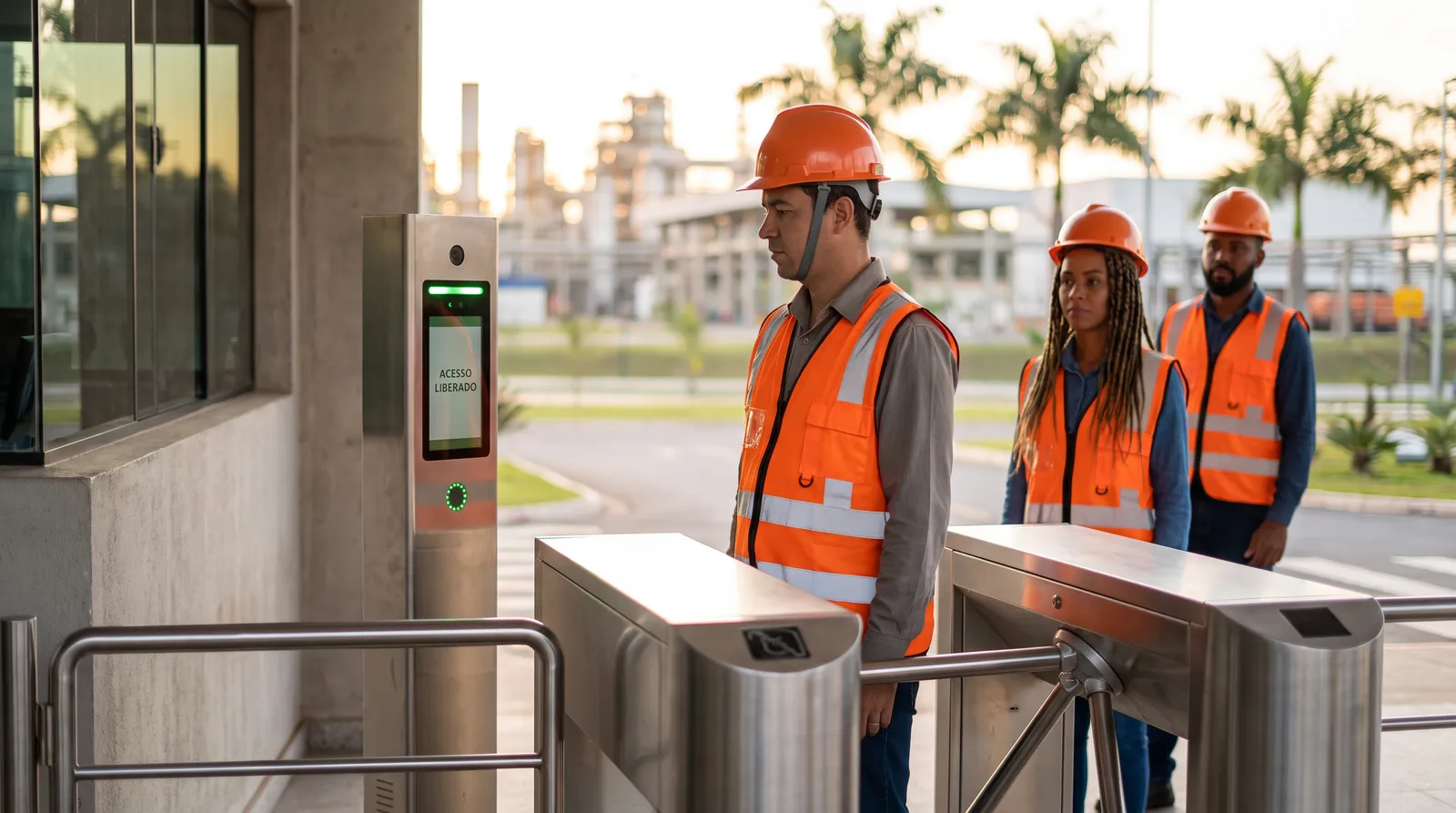
Photos and biometrics should only be used when there is a clear need. Under the LGPD, biometric data is sensitive personal data (art. 5, II). It may only be processed with specific consent or, without consent, in the cases set out in art. 11, such as fraud prevention and the data subject's security in identification and authentication processes (art. 11, II, g).
How to keep visitors safe in industrial areas
When a visit goes through operational areas, some precautions are basic:
- a safety briefing before entering, covering the area's risks, escape routes and the assembly point;
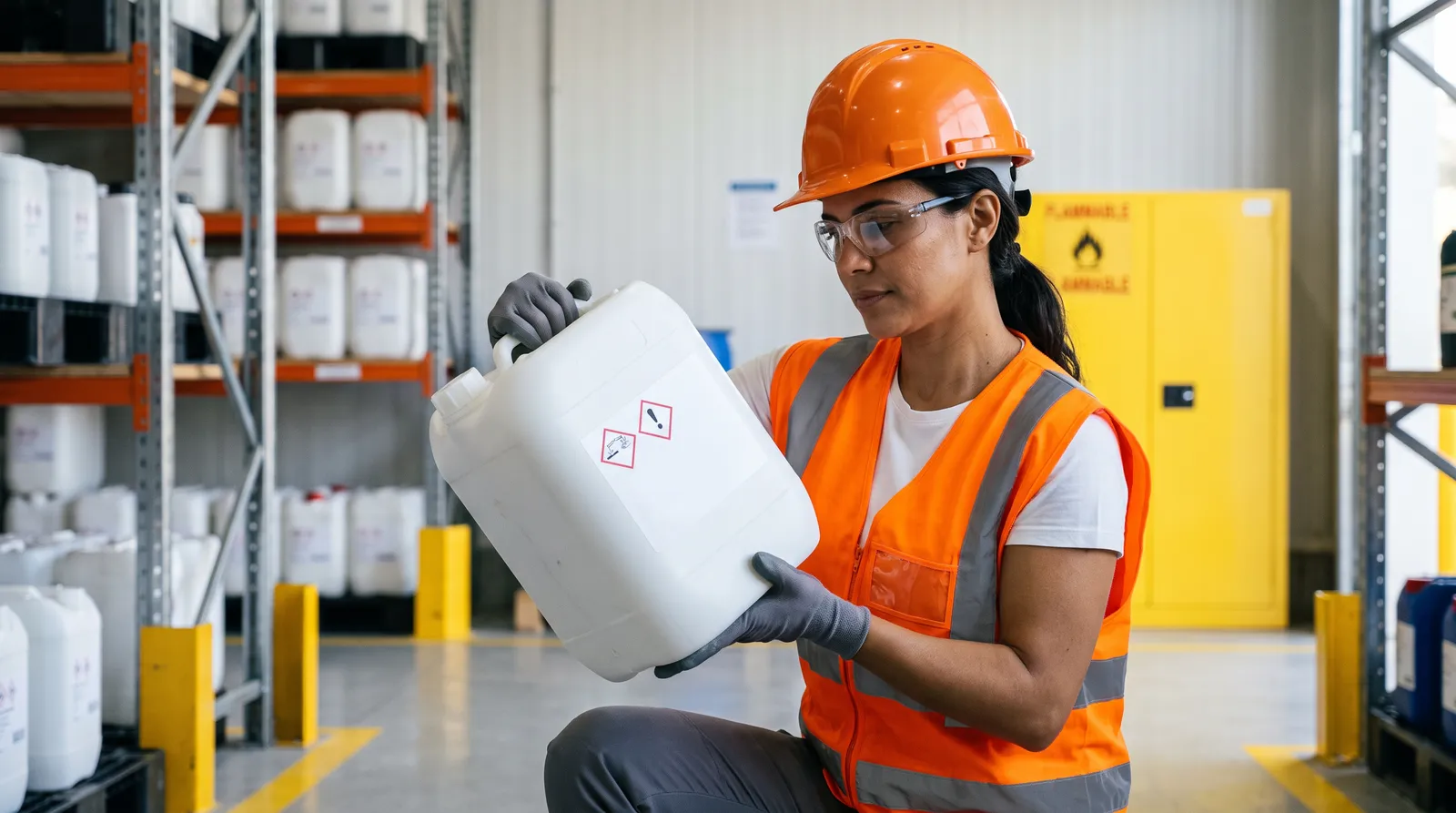
- PPE suited to the area, such as a helmet, safety glasses and hearing protection;
- an escort from a company employee at all times;
- defined routes, away from running machinery and high-risk activities;
- visible identification, such as a visitor badge in a different colour.
In an emergency, the gate needs to know how many visitors are on site and where. That is why recording exits is just as important as recording entries.
| Method | How it works | Limitation |
|---|
| Logbook or spreadsheet at the gate | The gatekeeper writes down the name, document and time | Hard to search and no reliable exit control |
| Pre-registration by the host | Whoever invites the visitor registers them before the visit | Depends on the host remembering to register them |
| System with badge or QR Code | The visitor receives a badge or code valid only for that day | Requires integration with the gate |
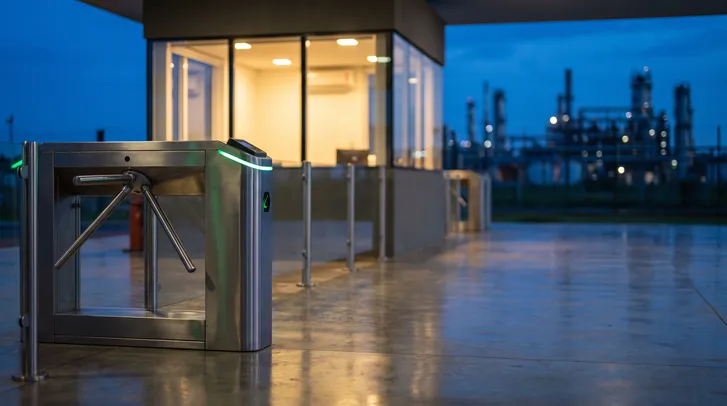
| Turnstile with facial recognition | The turnstile lets in the registered visitor | Involves biometric data and requires care with the LGPD |
How to implement visitor control in practice
- Define who can authorise visits. Usually, the employee receiving the visitor.
- Pre-register visitors. The host sends the details in advance, and the gate only checks them on arrival.
- Classify the areas. Separate open areas, areas that require an escort and areas off-limits to visitors.
- Prepare the safety briefing. A short video or a quick talk at reception covers most cases.
- Record the exit. Badge returned or the visit closed in the system when the visitor leaves.
- Set the data retention period. Keep records only for as long as necessary and tell the visitor.
Do you also receive service providers? See how contractor access control works.
Frequently asked questions about visitor control
What is visitor control?
It is the process of recording and authorising the entry of people who do not work at the company, such as customers, suppliers attending meetings and auditors. It defines who authorised the visit, which areas can be accessed, who accompanies the visitor and the time they left.
What is the difference between a visitor and a service provider?
A service provider, or contractor, carries out contracted work and must have up-to-date documents and training. A visitor does not perform a service. If the person is going to do any work at the plant, they must go through contractor control.
Can I ask visitors for a photo or biometrics?
Yes, but with care. Under the LGPD, biometric data is sensitive personal data (art. 5, II) and may only be processed in the cases set out in art. 11, such as specific consent or fraud prevention and the data subject's security in identification processes.
Do visitors need to wear PPE?
If the visit goes through areas with risks that require PPE, yes. The visitor must receive equipment suited to the area, be briefed on the risks and be escorted throughout the visit.
Why record when a visitor leaves?
To know who is still on site. In an emergency or evacuation, the company needs to account for everyone present, and a visitor without a recorded exit may be searched for unnecessarily or, worse, forgotten.
Official sources
Read also