So what exactly is PPE?
In this article we get straight to the point: the legal definition of this resource, the responsibilities of whoever supplies it and whoever wears it, and the pillars that take your operation beyond simple distribution into genuine preventive control.
What is PPE (Personal Protective Equipment)?
According to Brazilian Regulatory Standard 6 (NR-6), Personal Protective Equipment (PPE) is any device or product of individual use intended to protect the worker's health and physical integrity against occupational risks.
For an item to be officially considered PPE in Brazil, it cannot merely be "protective". It must hold an Approval Certificate (CA), a document issued by the Ministry of Labour and Employment attesting that the equipment has been tested and approved for its intended purpose.
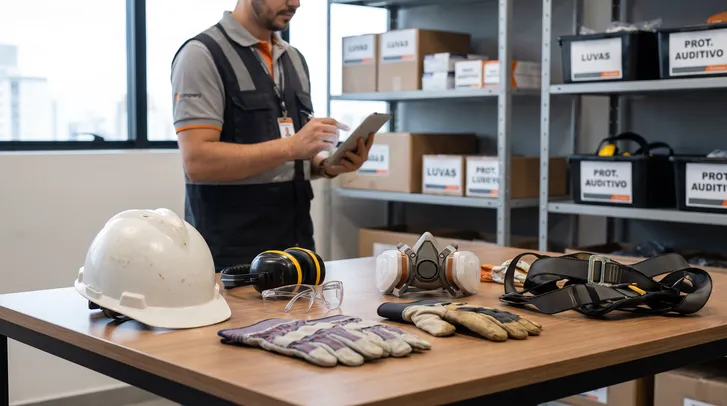
Safety glasses, helmets, ear protection (muffs or plugs), split-leather or nitrile gloves, full-body harnesses and steel-toe footwear are the most common examples in daily operations.
Responsibilities: company vs worker
The legislation is clear in dividing safety-related obligations. Handing over PPE does not end the company's role, just as receiving it does not release the employee from theirs.
Here is how NR-6 splits that commitment:
| Company responsibilities (employer) | Worker responsibilities |
|---|
| Supply PPE suited to the role's risk, free of charge. | Use the equipment only for its intended purpose. |
| Require and enforce its use throughout the working day. | Take responsibility for storing, cleaning and preserving the item. |
| Replace PPE immediately when damaged or lost. | Report to the company any change that makes it unfit for use. |
| Instruct and train the team on correct use and care. | Follow the company's instructions on proper use. |
The pillars of efficient PPE management
Many companies focus only on recording the handover for labour-audit purposes, forgetting that PPE management is a continuous strategic process.
Poor PPE control creates financial waste (unnecessary purchases or items expiring in stock) and exposes workers to risk through deteriorated equipment. To structure intelligent management, watch these three pillars:
Control of CA and manufacturer validity: the Approval Certificate has an expiry date for sale, but the equipment itself also has a service life set by the manufacturer. The EHS and Procurement departments must cross-check both before buying and distributing batches.
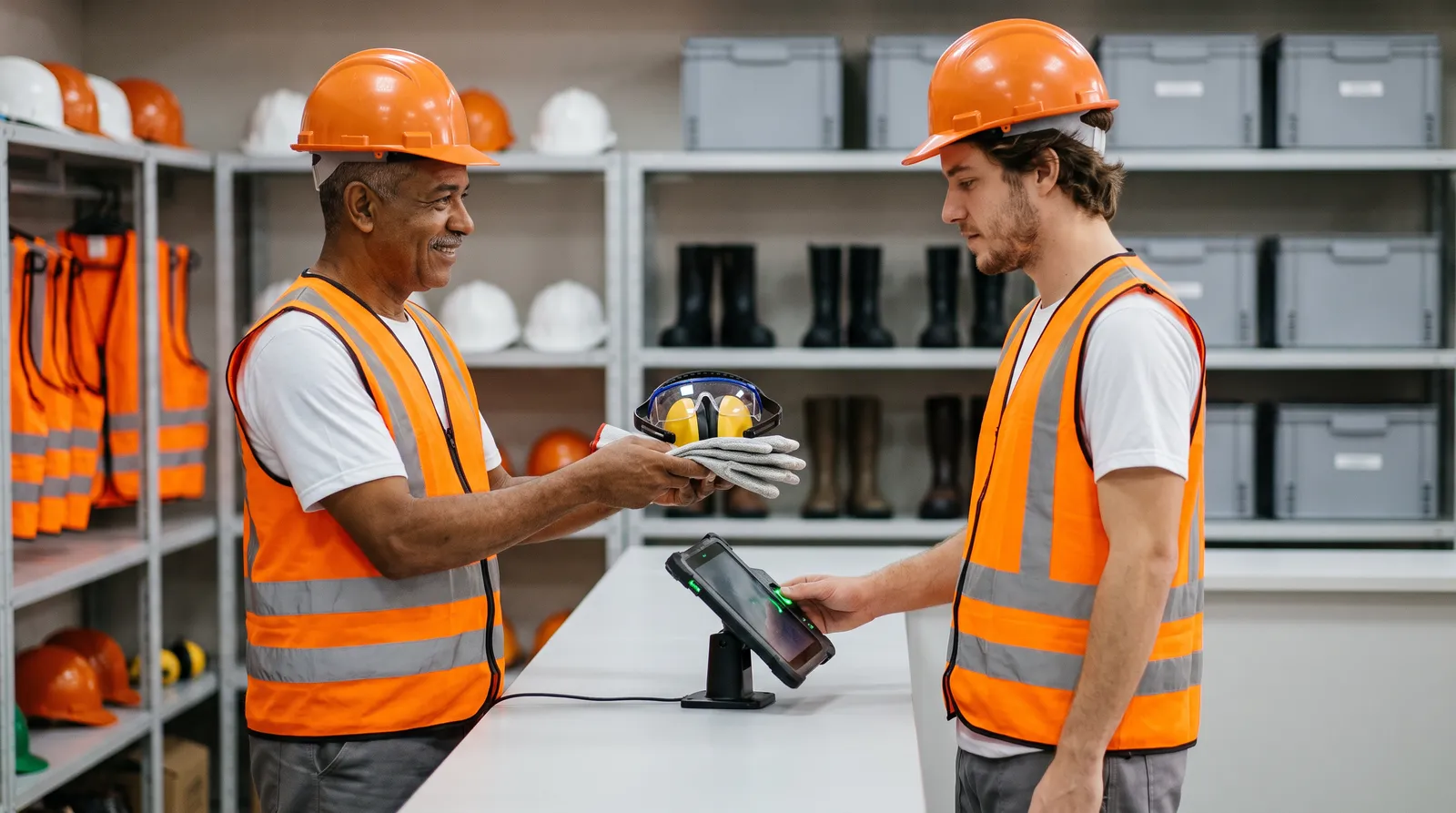
Training integrated with handover: issuing PPE must come with instruction. Handing over plug-type ear protection without teaching the worker to insert it correctly in the ear canal nullifies the equipment's effectiveness.
Monitoring replacement intervals: each role wears PPE differently. A glove on the welding line has a far shorter life than on a light assembly line. Management must map the average wear time to anticipate replacements before the equipment tears or fails at the work front.
It is worth remembering that, in the hierarchy of controls, personal protection is the last resort. To understand how to act at the source of the problem before it reaches the worker, see also our full article on Collective Protection Equipment (EPC).
Controlling stock, monitoring expiry dates and ensuring the right worker is wearing the right protection demands rigorous process organisation. How has your team been managing the life cycle of safety equipment in your operation?