Industrial operations involving extreme heat demand absolute technical rigour. Equipment that reaches hundreds or thousands of degrees Celsius does not only pose the obvious risk of severe burns, but also invisible threats, such as asphyxiation from gas build-up and catastrophic explosions.
To ensure that industrial-scale smelting, drying or firing does not endanger employees' lives or the company's facilities, Brazil's Ministry of Labour and Employment (MTE) sets out NR 14. This article details the construction and operating rules of this standard for the safe management of furnaces.
What does NR 14 establish?
Regulatory Standard 14 (NR-14) is one of the shortest and most objective texts in Brazilian labour legislation. It sets the minimum safety requirements for the construction, installation and operation of industrial furnaces.
Unlike lengthy standards focused on document management, NR 14 acts directly on the engineering of the equipment and its surroundings. Its aim is to shield workers from excessive radiant heat, prevent structural fires and stop combustion from contaminating the breathable air in the industrial building.
Key structural and safety requirements
The standard leaves no room for improvisation in the assembly or operation of this thermal equipment. The engineering team and the SESMT (the company's Specialised Service in Safety Engineering and Occupational Medicine) must ensure the plant meets the following guidelines:
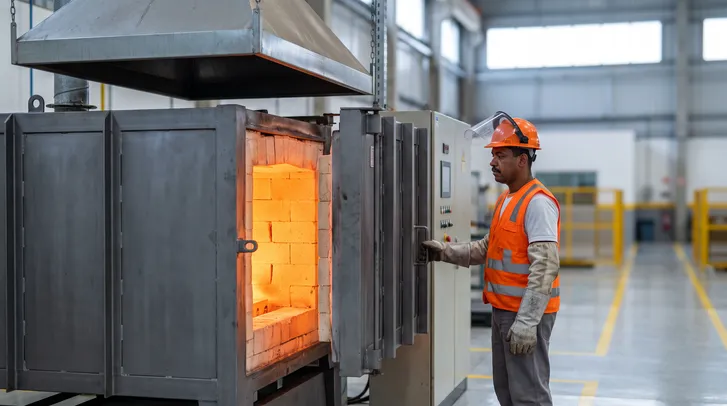
- Thermal Insulation: Furnaces must be solidly built and lined with refractory material. The legal purpose of this requirement is to prevent heat from radiating into the surrounding environment at levels above the tolerance limits set by NR 9 and NR 15, harming the team's health.
- Prevention of Gases and Smoke: The standard prohibits installing furnaces in places that favour the build-up of combustion by-products. They must be equipped with efficient exhaust systems to capture carbon monoxide and other emissions and carry them out of the workplace.
- Explosion Control in Gas Furnaces: Equipment that uses gaseous or liquid fuels must have protection systems (such as relief valves and automatic shut-off) to prevent explosions caused by ignition failure or leaks.
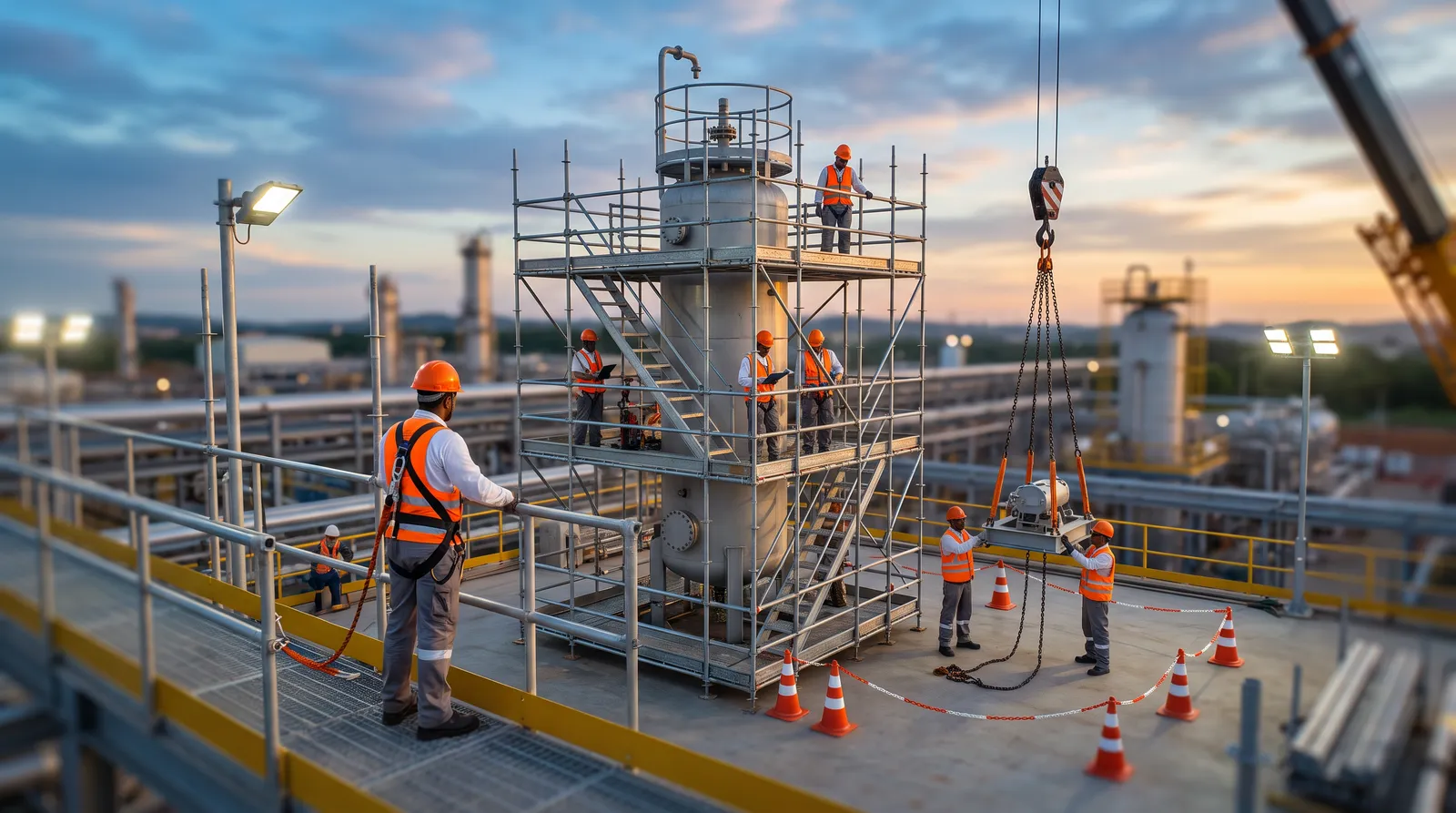
- Safe Access: Maintenance or loading operations require the stairs and platforms attached to furnaces to be solidly designed, ensuring fall prevention in high-risk areas.
Workplace inspection and ongoing maintenance
Even when the manufacturing requirements of NR 14 are met, operational safety depends on maintenance. Cracked refractory linings or blocked exhaust ducts turn a safe furnace into a source of Serious and Imminent Risk (RGI, from the Portuguese Risco Grave e Iminente).
Integrating structural checks into daily checklists and inspections is the best practice to confirm that exhaust fans are working properly and the thermal insulation is intact before each production shift begins. A furnace inspection checklist helps record these checks.
Frequently Asked Questions (FAQ) about NR 14
To make the technical and legal aspects of the standard easier to understand, we answer below the main operational questions about industrial furnaces, based on MTE legislation:
1. Does NR 14 require a specific lining for furnaces?
Yes. The standard explicitly requires furnaces to be lined with suitable refractory material. The legal purpose of this lining is to contain the high temperatures inside the equipment, preventing radiated heat from reaching workers nearby.
2. Where should industrial furnaces be installed?
NR 14 states that furnaces must be installed in suitable locations that provide maximum safety and comfort for the team. Installation in enclosed areas without sufficient ventilation or exhaust is expressly prohibited, to prevent the build-up of harmful gases and smoke.
Any stairs or access platform needed to operate, load or maintain the furnace must be built in a way that ensures workers' complete safety, meeting the parameters for fall protection and thermal insulation of contact surfaces.
4. What precautions are required for furnaces that use gaseous fuels?
For furnaces fuelled by gas or liquid fuels, the standard requires automatic safety systems to be installed. These devices must ensure that, in the event of flame failure or a leak, the fuel supply is cut off immediately, avoiding the risk of explosions from gas building up inside the equipment.