Brazil's legal framework for occupational safety is extensive, made up of dozens of standards specific to different sectors and types of exposure. Even so, the technical and administrative application of all these rules stems from a single foundational document.
So, what exactly is NR 01, and what is its role in EHS?
In this article, we detail the role of this foundational standard, the structure of Occupational Risk Management (GRO) and the immediate obligations it places on employers.
What is NR 01 and what is its role in EHS?
NR-01 (General Provisions and Occupational Risk Management) serves as the master guideline for occupational safety in Brazil. Its purpose is to establish the scope of application, the technical terms and the general rules that guide all the other Regulatory Standards (NRs).
In item 1.4, the standard clearly defines rights and duties. It requires the company to inform employees about occupational risks, the means to prevent them and the measures adopted by the organisation, as well as formally guaranteeing the worker's "right to refuse" in situations of serious and imminent risk. In return, it establishes the employee's duty to comply with the standards and use PPE correctly.
Occupational Risk Management (GRO) in practice
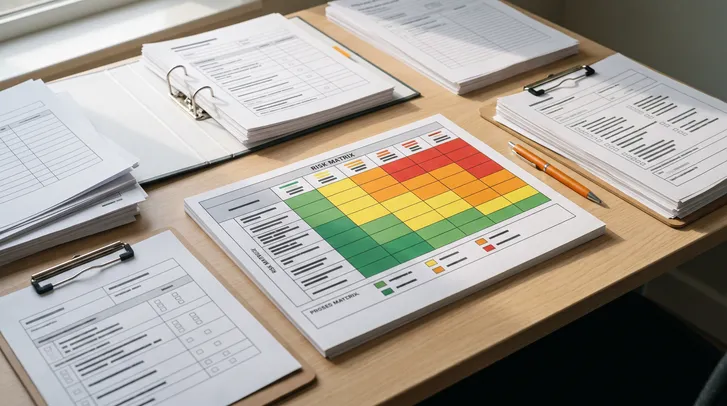
In item 1.5, NR-01 establishes Occupational Risk Management (GRO), a continuous and systemic approach to prevention. GRO requires the company to identify hazards and assess risks in an integrated way, recording that information in the Risk Management Programme (PGR).
The PGR consolidates the risk inventory and the operation's action plan. For the technical team, understanding that the PGR is the foundational document of occupational safety and NR-01 is key to keeping the SESMT legally compliant. To review all the recent guidelines and the impact of this systemic structure, we also recommend reading our article on what changes with the new NR-01.
Main operational requirements of the standard
To guarantee full compliance with NR-01, the EHS department must build solid processes. Among the core obligations are:
- Drawing up and maintaining the PGR: the risk inventory and action plan must be kept up to date, reflecting the reality of the operation, the accident history and changes to production processes.
- Training and qualification (item 1.7): the standard regulates the guidelines for safety training, allowing distance learning (e-learning) or blended formats, provided the strict operational, administrative and technological requirements set out in its Annex II are met.
- Managing contractors: NR-01 explicitly requires the contracting company to pass on information about workplace risks to service providers, requiring the risk inventories of the contractor and the contracted company to be aligned within the same physical space.
- Differentiated treatment (item 1.8): the standard sets out administrative flexibilities, such as waiving the requirement to draw up a PGR for Micro (ME) and Small Businesses (EPP) at risk levels 1 and 2 that have no physical, chemical or biological occupational exposures, upon digital declaration.
Digitalising Risk Management
Keeping the PGR up to date and managing the action plan across dozens of work fronts using spreadsheets is an unsustainable method for medium and large operations. The lack of traceability in carrying out preventive actions exposes the company to fines in the event of regulatory audits.
Moving to EHS management software lets the technical team centralise the risk matrix, track the expiry of mandatory training and monitor the status of the action plan in real time. Technology turns NR-01 from a bureaucratic obligation into a continuous-improvement tool, integrating field data with management decisions made in the office.
The foundation of operational safety depends on a living, dynamic risk management process. How does your team currently guarantee the ongoing update of the risk inventory and the practical follow-up of the PGR action plan?