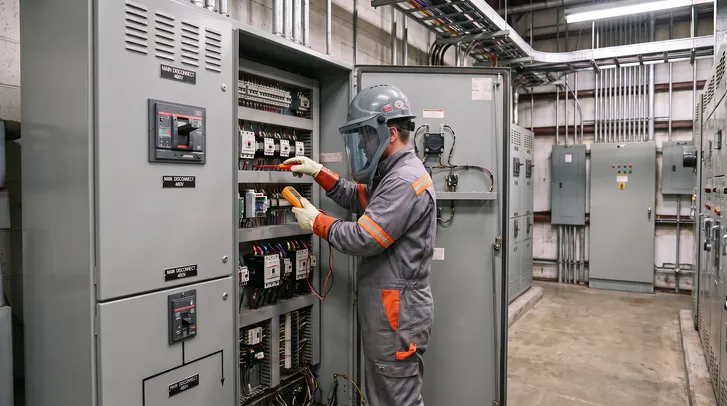
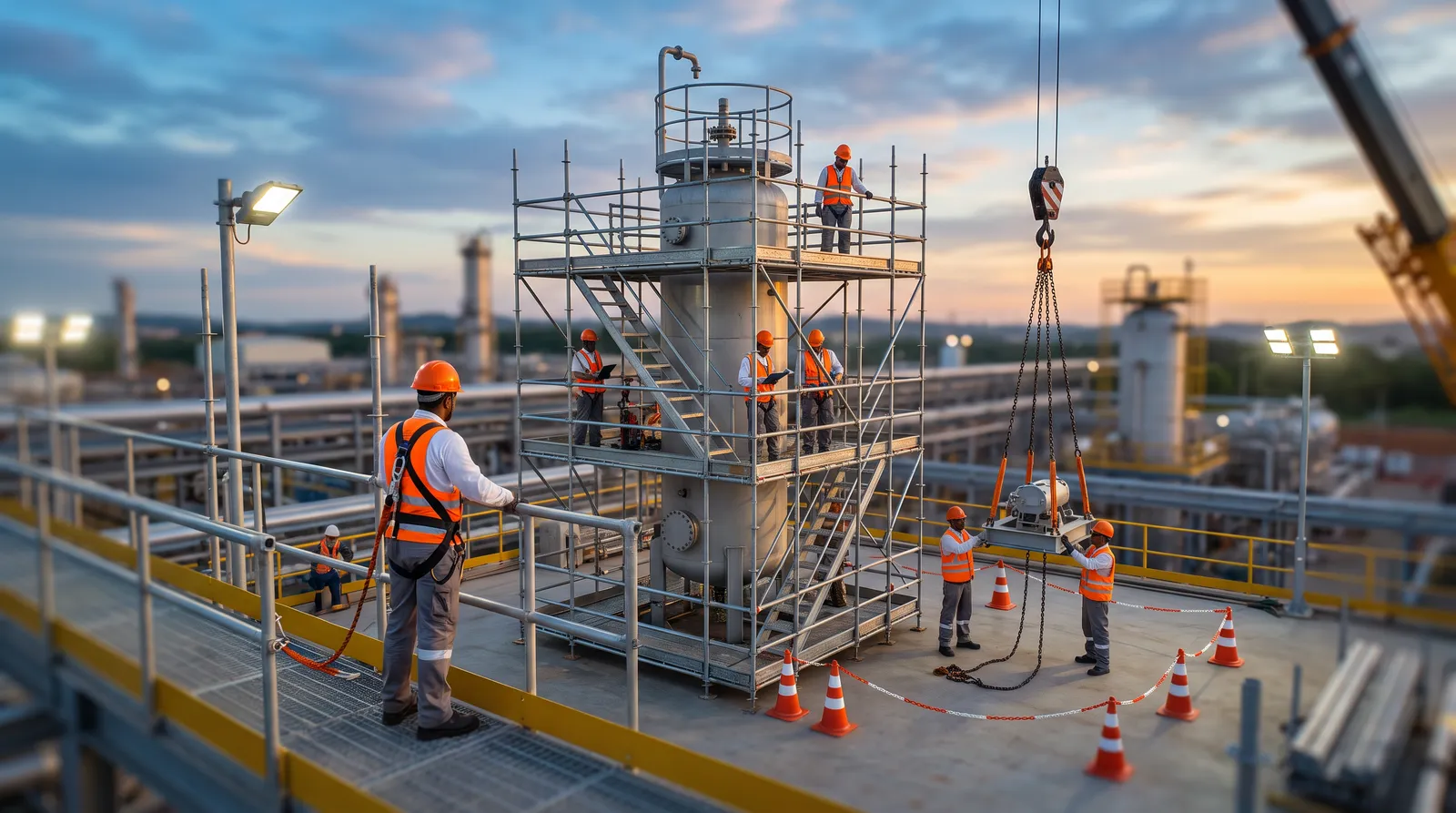
In Environment, Health and Safety (EHS), exposing workers to occupational risks creates financial and legal obligations for the company. Two of the most common monetary compensations in Brazil — and the ones that most often confuse HR and safety teams — are the adicional de insalubridade (unhealthy-work pay) and the adicional de periculosidade (dangerous-work pay).
Although both exist to compensate the employee for a risk taken during the working day, they have completely different technical natures, calculation bases and legislation.
In this article we explain the characteristics of each, according to the Brazilian Regulatory Standards in force, and how to tell the two classifications apart.
What is unhealthy-work pay (NR-15)?
Unhealthy-work pay is regulated by Regulatory Standard 15 (NR-15). It applies when the worker is exposed to agents harmful to health (physical, chemical or biological) above the tolerance limits set by law.
The defining characteristic here is gradual harm. Continuous exposure to the harmful agent — excessive noise, mineral dust, heat or biological agents — can make the worker ill over time.
Payment is split into three degrees, calculated on the prevailing minimum wage (or the category's collective-bargaining wage, depending on the agreement):
- Minimum degree: 10%
- Medium degree: 20%
- Maximum degree: 40%
Characterising and classifying the degree depends on a Technical Report on Working Environment Conditions (LTCAT), signed by an Occupational Physician or a Safety Engineer.
What is dangerous-work pay (NR-16)?
Dangerous-work pay, in turn, is regulated by Regulatory Standard 16 (NR-16). It is due when the worker performs activities that carry a heightened, immediate risk to life.
Where unhealthy work makes you ill over time, dangerous work carries an imminent risk of fatality or instantaneous serious injury. Activities or operations considered dangerous are those involving exposure to:
- Flammable materials and explosives.
- High-voltage electricity.
- Ionising radiation or radioactive substances.
- Motorcycle work.
- Personal or asset security (exposure to robbery or physical violence).
Unlike unhealthy work, there are no "degrees" of danger. Payment is fixed: an increase of 30% on the employee's base salary (excluding increases from bonuses, awards or profit sharing).
What is the main practical difference?
To make it easier in the technical management routine:
- Nature of the risk: unhealthy work affects health chronically (illness); dangerous work threatens life acutely (fatal accident).
- Calculation base: unhealthy-work pay is calculated (as a rule) on the minimum wage; dangerous-work pay on the worker's base salary.
- Cumulative? Under article 193, § 2 of the Brazilian labour code (CLT), the two are not cumulative. If an activity is simultaneously unhealthy and dangerous, the worker must choose whichever is financially more advantageous.
These allowances depend on a well-documented risk inventory in the PGR.
The link with health monitoring
Classifying an activity as unhealthy does not only affect payroll. From an EHS standpoint, the presence of harmful agents in the working environment obliges the company to carry out continuous clinical screening specific to each identified risk (noise, chemicals or mineral dust, for example).
This technical correlation is the basis of occupational disease prevention. The same environmental agents that justify the additional payment must directly guide the operation's medical guidelines. This is where the PCMSO plays a fundamental role, defining the periodic examinations and the clinical requirements of NR-7 to monitor and protect the health of workers exposed to these conditions.