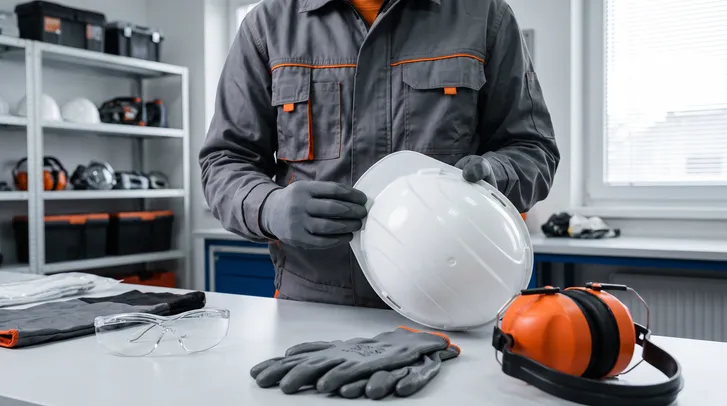
The effectiveness of Personal Protective Equipment (PPE) cannot be assumed from its appearance or brand alone. For the company to be legally protected and the worker genuinely shielded from occupational risks, the equipment must pass rigorous laboratory testing and obtain official government certification.
If you work on the front line of occupational safety or in procurement, understanding what the CA for PPE is, is the first step to complying with Brazilian Regulatory Standard 06 (NR-06).
In this article we detail the concept of this certificate, why checking its validity before handover matters, and how technology has eliminated the failures of traditional paper records.
What is the CA for PPE, and why is it mandatory?
CA stands for Certificado de Aprovação — Approval Certificate. It is a document issued by the Brazilian Ministry of Labour and Employment (MTE) attesting to the effectiveness of a piece of PPE against the risks it was designed for.
Under NR-06, every piece of Personal Protective Equipment, whether locally made or imported, may only be sold and used at the work front if it holds an active CA. The CA number must be printed on the equipment itself (helmets, gloves, boots, goggles and so on), allowing the Environment, Health and Safety (EHS) team to identify it quickly during inspection rounds.
Handing over equipment with no CA, or with an expired one, is legally equivalent to providing no protection at all. In the event of a workplace accident the company may be held liable for negligence and face severe labour liabilities on top of regulatory fines.
How and why to run a CA lookup
A common operational mistake in PPE management is confusing the equipment's shelf life (set by the manufacturer) with the CA's validity (set by the Ministry of Labour).
The PPE may be brand new and within its manufacturing expiry date, but if the batch's CA has expired at the time of purchase, the equipment cannot be bought or issued to the employee. That is why the CA lookup is a mandatory verification step.
The lookup can be done free of charge through the official government system (Consulta CA) or through specialised portals. Entering the number printed on the equipment, the safety professional should check:
- Whether the certificate is "Valid" or "Expired".
- The approved technical characteristics (for example, the attenuation level of ear protection).
- Whether the equipment looked up matches exactly what is physically being handed over.
From paper to digital PPE control
Making sure only equipment with valid CAs is purchased is just the first step. The biggest EHS management challenge is recording the handover, replacement and return of those items.
Historically, companies use a paper PPE record sheet. That method is highly vulnerable: sheets get lost, signatures become illegible, corrections legally invalidate the document, and there is no automatic alert when a CA or piece of equipment is about to expire. When an inspector or court expert asks for proof of handover, the safety team loses hours searching physical folders.
Moving to digital PPE control resolves that liability instantly. With a specialised management system, the EHS team gains automatic safeguards. The platform itself blocks the registration of a handover with an expired CA and alerts the team when a worker's equipment reaches its replacement date. This traceability removes administrative rework and connects seamlessly with employee document control routines, keeping each employee's file always complete.
Using paper sheets to manage thousands of PPE handovers is a legal and operational risk your company does not need to take. Discover how to guarantee 100% traceability and legal compliance with GAP Sistemas' solutions for digital PPE control. How does your operation monitor CA validity today?