
General
Understand the concept of OHS, the difference between occupational health and safety, and how efficient management reduces costs and liabilities in the third-party supply chain.
By:
Guilherme Herker
Occupational Health and Safety (OHS) is no longer viewed by organizations merely as a cost center or a legal requirement to avoid fines. In today's corporate landscape, OHS represents a vital indicator of performance and governance.
Companies with high accident rates or occupational diseases face elevated operational costs, loss of productivity, and severe damage to brand reputation. Efficient management requires the same seriousness dedicated to financial indicators, integrating preventive practices to protect not only direct employees but the entire value chain and business partners (subcontractors).
What is the Difference Between Occupational Health and Work Safety?
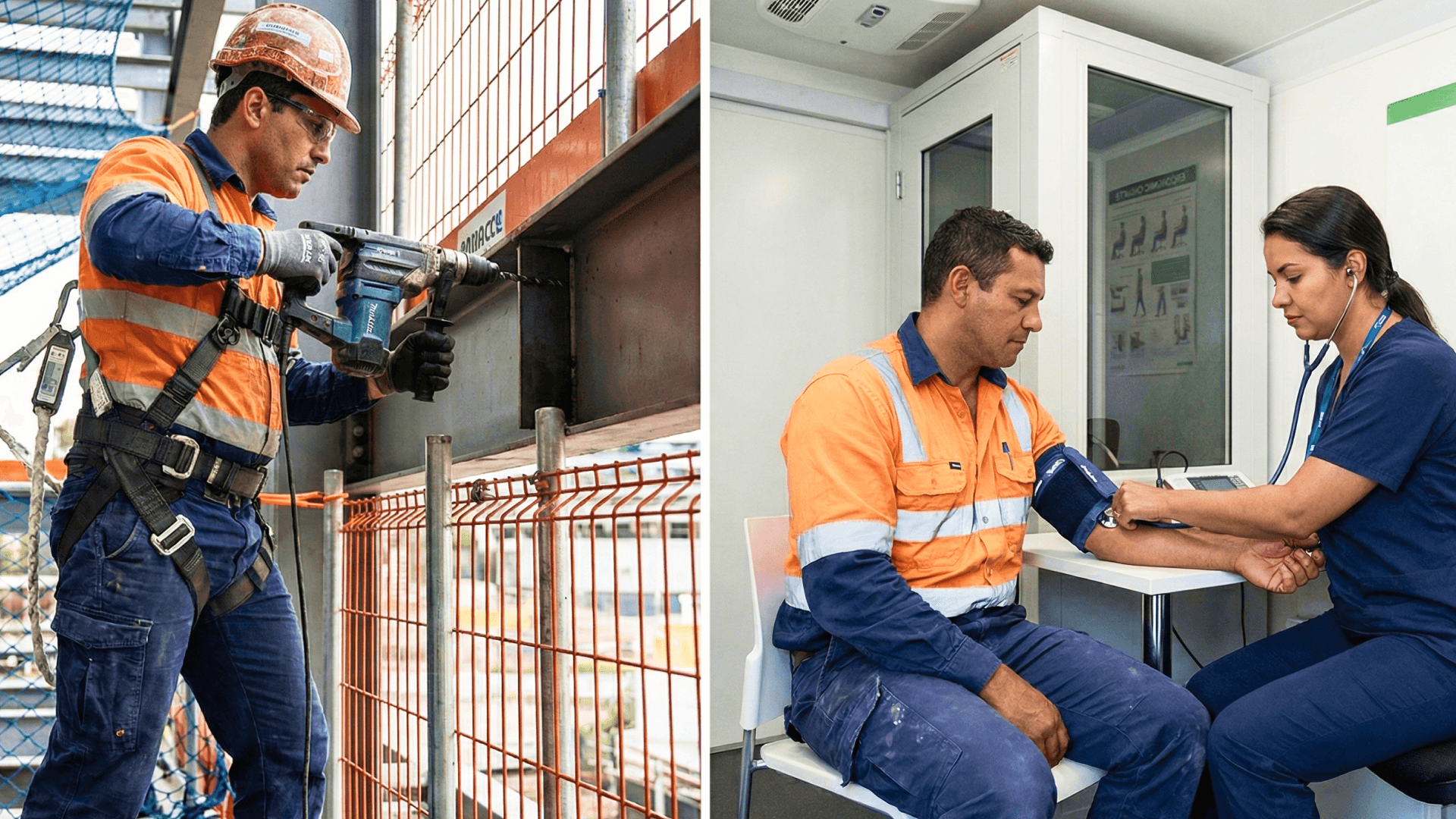
Occupational Health and Safety is a multidisciplinary field aimed at protecting the physical and mental integrity of the professional. Although the acronym (OHS) unites both concepts, to structure efficient governance, it is essential to understand the difference in how they operate.
Work Safety has an immediate prevention character. It studies the causes and acts to prevent sudden accidents, such as falls, electric shocks, or machinery failures. The primary way to ensure this safety is through continuous risk mapping, materialized in occupational risk management and the PGR (Program for Risk Prevention).
On the other hand, Occupational Health focuses on the long term. Its objective is to prevent diseases that develop silently and gradually due to continuous exposure to harmful agents, such as noise-induced hearing loss or repetitive strain injuries (RSI). The control of this health is routinely carried out through the PCMSO (Occupational Health Medical Control Program), which requires the rigorous issuance and monitoring of Occupational Health Certificates (ASOs).
Both must go hand in hand in the operation. A safe environment prevents accidents today; a healthy environment prevents labor liabilities tomorrow.
The Impact of OHS on Contractor Management
It is common for large companies to have excellent OHS processes for their own employees, but end up neglecting the outsourced team. This is a strategic mistake that exposes the company to immeasurable risks.
Legally, the liability for the physical integrity of anyone working at your facilities is joint or subsidiary. If a service provider suffers an accident or develops an occupational disease inside your plant, the contracting company can be sued in court to bear the costs of treatments and compensations.
Efficient OHS governance requires equality of processes. The same rigorous criteria applied to internal staff — such as validation of medical exams, up-to-date training, and correct use of PPEs — must be mandatorily required and audited from suppliers before and during mobilization.
Main Regulatory Standards (NRs) Applied
Brazil has a very detailed legal framework for worker protection. Among the current Regulatory Standards, some form the backbone of any safe operation:
NR-1 (General Provisions): It is the standard that modernized the area, establishing the mandatory nature of occupational risk management and bringing a vision of continuous prevention.
NR-7 (PCMSO): Regulates all medical routine exams (admission, periodic, dismissal) and occupational health monitoring.
NR-6 (PPE): Defines the mandatory nature, specifications, and delivery management of Personal Protective Equipment.
NR-9 (Exposure Assessment): Focuses strictly on assessing exposure to physical, chemical, and biological agents in the environment.
Cost Reduction and Governance through Technology
Structuring OHS acts as a direct lever for financial efficiency. Proactive management impacts cash flow through the reduction of the FAP (Accident Prevention Factor). FAP is a multiplier applied to payroll taxes. Companies with fewer accidents receive tax bonuses, while those with high accident rates suffer heavy financial penalties.
In addition to tax savings, OHS ensures operational continuity. A serious accident can paralyze an entire production line for inspection by regulatory bodies, generating daily losses and breach of contracts.
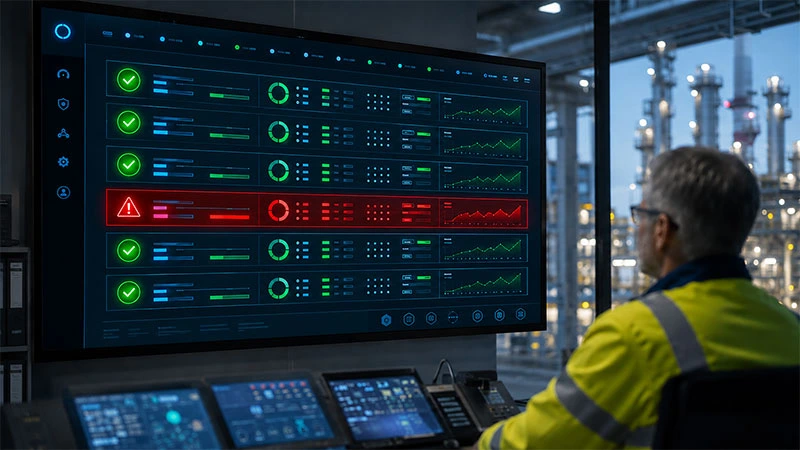
To ensure this operational efficiency while controlling hundreds of employees and contractors, using physical folders or spreadsheets becomes unfeasible and highly susceptible to errors. Digitalization is the safe path to real-time governance.
Does your company treat Occupational Health and Safety as bureaucracy or as a strategic pillar?
Do not leave your operation exposed to labor liabilities due to failures in document control and training of your supplier chain.
Discover GAP's solutions and ensure total OHS compliance for your entire operation.