General
EHS Management | Why technology is the future?

Discover how technology is revolutionizing EHS Management. Optimize the control of PPEs, work permits, and documents with integrated software. Boost safety!
By: Felipe Gaya
Discover how technology is revolutionizing EHS Management. Optimize the control of PPEs, work permits, and documents with integrated software. Boost safety!
By: Felipe Gaya
In an industrial scenario where efficiency and safety are imperative, a robust EHS (Environment, Health, and Safety) management is what separates successful companies from those that fall behind. But as the complexity of operations and regulations increases, traditional control methods become insufficient.
This is where technology emerges not as an option, but as the future of the field. In this article, we explore the pillars of modern EHS management and how an integrated platform can be the engine to transform your processes, ensuring safety and compliance in an intelligent way.
Technology acts directly on the most critical points of EHS, transforming complex tasks into automated and secure processes.
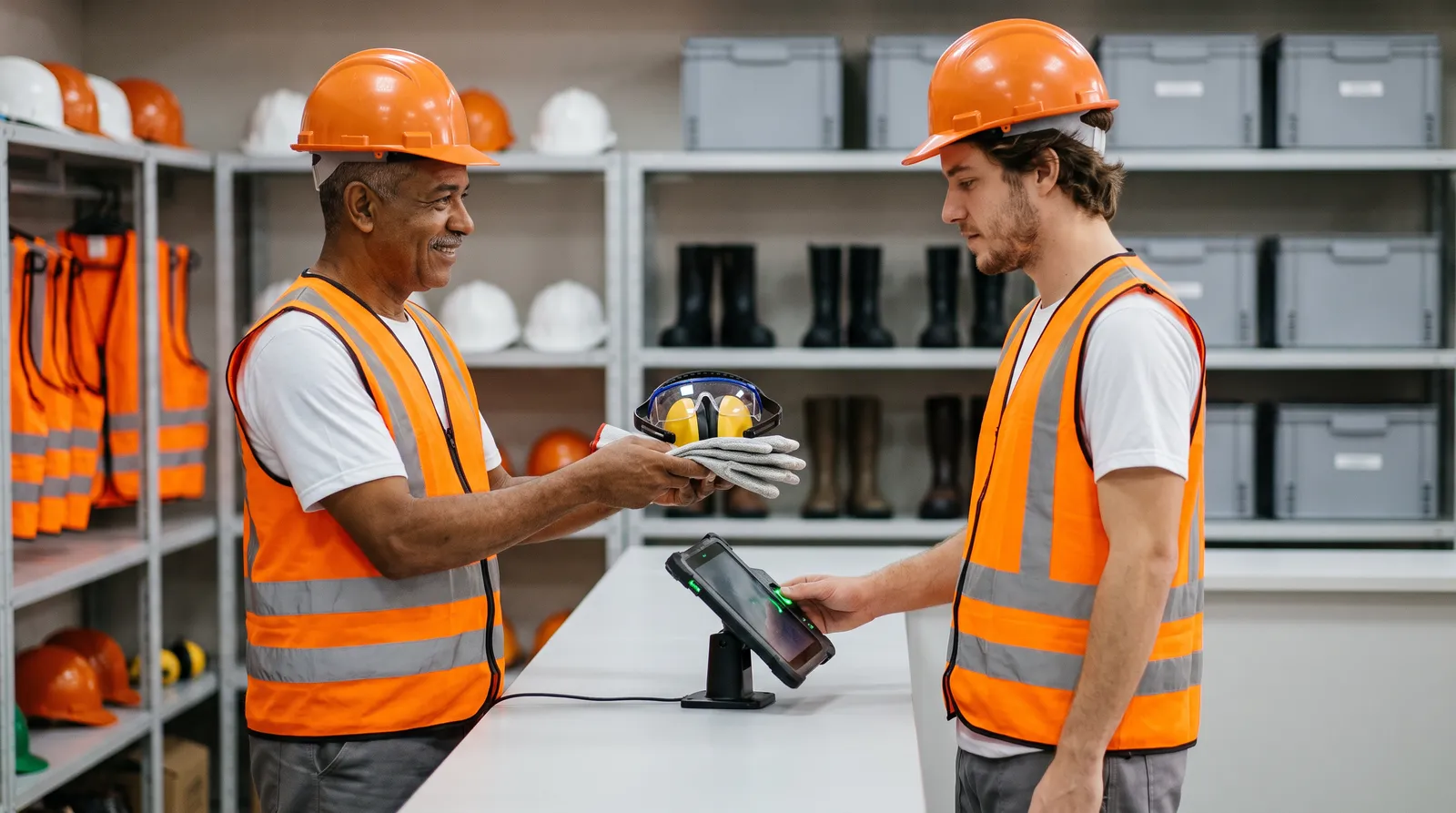
Another critical aspect of EHS management is the difficulty that companies face in maintaining control over the maintenance and expiration of personal protective equipment (PPE), which can compromise employee safety and compliance with regulatory standards.
With automation, management is more precise, monitoring PPE expiration, scheduling preventive maintenance, and even alerting managers when an item needs to be replaced or when there is a risk of failure, as with GEEQUIP. This way, it is possible to ensure that all equipment complies with safety standards.
. The digital work permit is already revolutionizing the way companies manage authorizations for high-risk activities, such as working at heights, in confined spaces, and many others. Instead of relying on paper and manual processes, digitalization allows permits to be issued immediately, with more meticulous control of data.
The issuance of the digital work permit directly implies a reduction in administrative error risks, which not only improves operational safety but also provides a clear and real-time view of the status of activities being performed within the company.
The document management is one of the pillars of successful EHS management. Compliance with NRs, validity of training, and environmental safety require companies to keep a massive amount of documents updated and accessible.
But what happens if these documents are lost, disorganized, or not accessible when needed? When this occurs, the risk of non-compliance increases and the company can be heavily penalized for it.
Therefore, good management of documents and contractors requires that all information be stored in an organized manner, with easy access to all essential documents for audits, training, maintenance, and inspections.
And the best way to achieve this goal is through digitalization, since automation ensures that no document expires without being renewed or passes without being analyzed with the appropriate signatures in time, preventing potential failures.
In summary, automation not only facilitates compliance control but also increases operational efficiency, allowing the company to focus on other critical areas of safety, health, and environmental management.
GAP Sistemas offers complete solutions for EHS management to automate processes with tools for contractor management, equipment management, digital work permits, document management, training management, and much more.
GAP Sistemas offers complete solutions for EHS management, automating processes with tools for contractor management, equipment, work permits, documents, training, and much more. In summary, automation not only facilitates compliance control but also increases operational efficiency.
With GAP Sistemas, your company can:
Automation is no longer just a trend, it is a necessity for companies seeking effectiveness, compliance, and safety. Investing in it not only optimizes operations but also ensures that your company is prepared to face the challenges of the future.
Find out what NR 13 establishes, why safety inspections of boilers and pressure vessels matter, and the role of the Qualified Professional (PH).
Understand the NR 11 rules for safe transport, handling, storage and manipulation of materials with forklifts, overhead cranes and cranes.
Understand what the updated NR 9 is, how it governs the assessment of physical, chemical and biological agents, and its direct link with the PGR (NR 1).
Get to know NR 8 and understand the technical requirements for ensuring the safety, thermal comfort and structural stability of buildings used as workplaces.
Understand what NR 6 is, the employer's responsibilities when issuing PPE, the worker's duties and how to streamline PPE control in your company.
Understand what NR 5 is, its sizing rules, the election process deadlines and the standard's new requirements on combating harassment in companies.
Simplify your Risk Management, reducing liabilities and ensuring safe, standardized, and auditable operations with fast implementation and advisory support.