Equipment that operates under high pressure and extreme temperatures stores a massive amount of energy. A material failure or neglected maintenance on a cylinder or tank can lead to catastrophic explosions, with the potential to destroy entire facilities and cause multiple fatalities.
Because these industrial assets are so critical, Brazil's Ministry of Labour and Employment (MTE) dedicates an exclusive, strictly technical and rigorous regulation to them: NR 13. This article details the operational and legal requirements for managing this equipment safely, based on the current regulatory updates.
What does NR 13 establish?
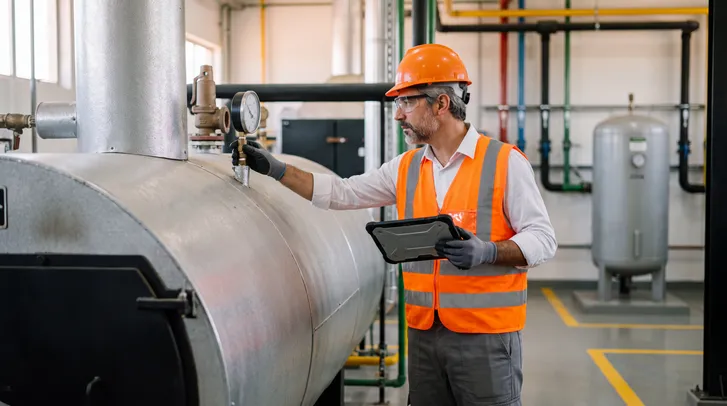
Regulatory Standard 13 (NR-13) sets out the mandatory technical requirements for managing the structural integrity of Steam Boilers, Pressure Vessels, Piping and Metal Storage Tanks.
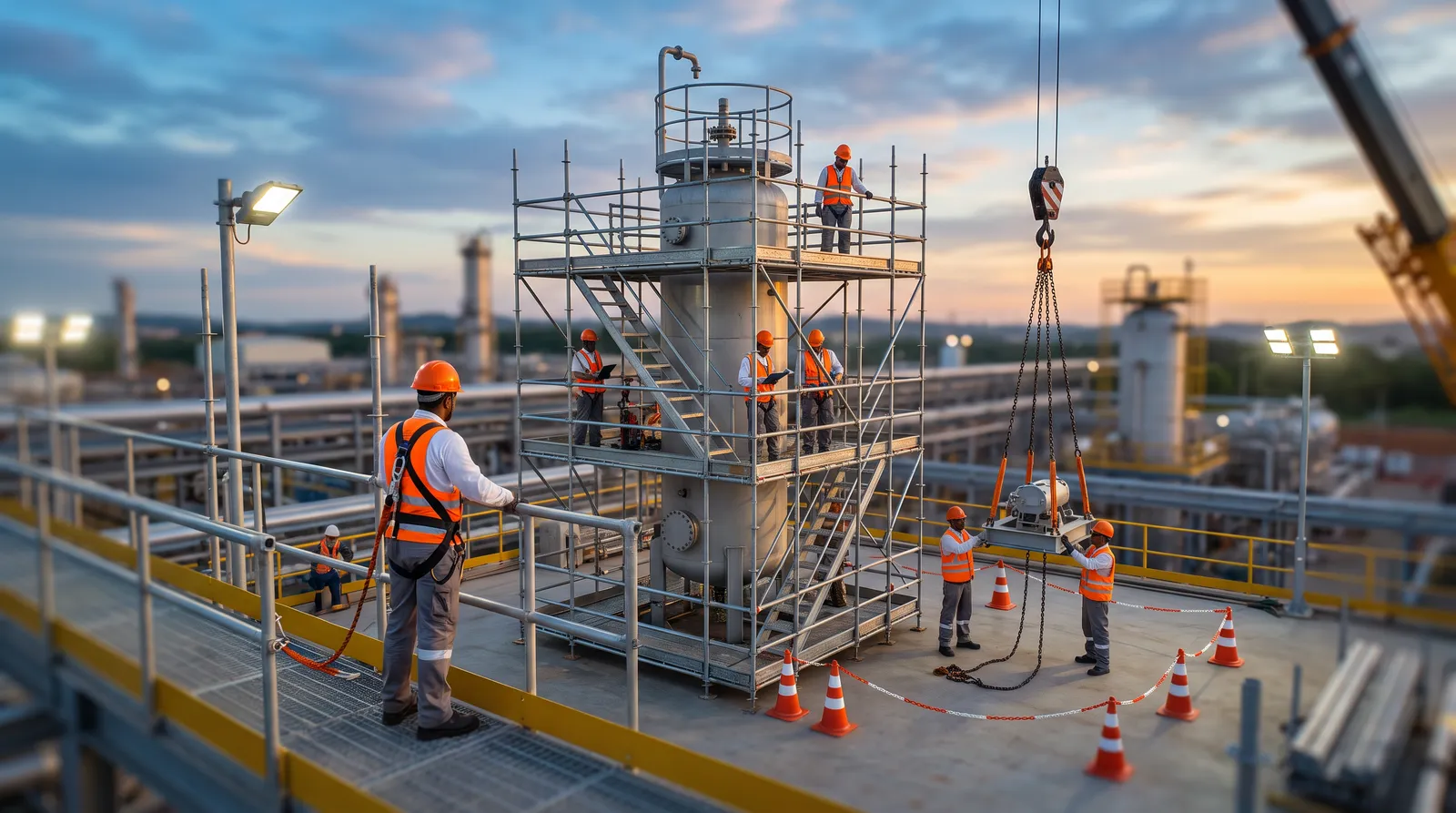
It applies compulsorily to any company that has this type of equipment on site, ranging from a large boiler at a steel mill and large fuel storage tanks to an air compressor in a maintenance workshop.
The central focus of the standard is to ensure that the design, operation, maintenance and inspection of these systems are carried out in a way that eliminates the risk of rupture. The legislation provides for a finding of Serious and Imminent Risk (RGI, from the Portuguese Risco Grave e Iminente) and the immediate shutdown of the equipment if critical items — such as uncalibrated safety valves or missing pressure indicators — are identified.
The exclusive role of the Qualified Professional (PH)
Unlike other EHS (Environment, Health and Safety) routines that the plant's occupational safety technicians can carry out on their own, inspections governed by NR 13 require advanced technical expertise in materials, mechanics and thermodynamics.
The standard assigns technical responsibility for physical inspections and reports exclusively to the Qualified Professional (PH, from the Portuguese Profissional Habilitado). According to the legal text, the PH is the professional legally entitled to practise engineering in activities relating to construction design, monitoring of operation and maintenance, inspection and supervision of inspection of boilers and pressure vessels, duly registered with their professional council (CREA, the Regional Council of Engineering and Agronomy).
Technical documentation: Equipment File, Safety Logbook and Inspections
NR 13 inspections are relentless when documentation is missing or deadlines are missed. The standard requires full traceability of the equipment's life cycle. The mandatory technical dossier includes:
- Equipment File (Prontuário): Must be supplied by the manufacturer and contain the design code, year of manufacture, Maximum Allowable Working Pressure (PMTA, from the Portuguese Pressão Máxima de Trabalho Admissível), material specifications and functional characteristics.
- Safety Logbook (Registro de Segurança): A book with numbered pages (or an equivalent digital system with data security) in which every occurrence that may affect the equipment's safety must be recorded, along with notes on inspections.
- Safety Inspection Reports: Boilers and pressure vessels must undergo initial (before entering service), periodic and extraordinary safety inspections. The frequency of periodic inspections varies according to the equipment's technical category, and the reports must be signed by the PH.
Compliance management for pressurised equipment leaves no room for operational oversights. Strict control of the calendar for instrument calibration, hydrostatic tests and periodic inspections is what ensures the team's physical integrity and the safe continuity of industrial operations.
Frequently Asked Questions (FAQ) about NR 13
To clear up the most complex day-to-day questions faced by the SESMT (the company's Specialised Service in Safety Engineering and Occupational Medicine), we have compiled the official answers from the Ministry of Labour and Employment (MTE) on how equipment is classified:
1. Are organic fluid vaporisers covered by NR-13?
Yes. According to the MTE's technical guidelines, equipment designed in accordance with international design codes (such as ASME) for organic fluid vaporisers falls within the scope of NR-13 and must comply with its requirements.
2. Who is legally responsible for rented or loaned equipment?
Regardless of the obligations set out in commercial contracts (lease, leasing or free loan), responsibility for ensuring a safe working environment for employees lies with the company that operates the equipment. However, the owner (lessor) must provide the Equipment File and the up-to-date inspection report.
3. Can the boiler's factory Hydrostatic Test report be signed by the manufacturer's technical lead?
Yes. According to the official clarifications of the standard, as long as the manufacturer's technical lead is legally qualified as a Qualified Professional (PH) with the corresponding Technical Responsibility Note (ART, from the Portuguese Anotação de Responsabilidade Técnica), they can and should sign the report for the test carried out at the factory.
4. What is PMTA in NR 13?
PMTA stands for Pressão Máxima de Trabalho Admissível — Maximum Allowable Working Pressure. It is the maximum pressure the equipment can safely withstand under normal operating conditions. Operating boilers or pressure vessels above this limit is prohibited and constitutes an immediate risk of explosion.