
Inspections and Checklists

Learn what a safety inspection is, discover the main types (routine, periodic), and see how automation optimizes the process for accident prevention.
By:
Felipe Gaya
Manual processes, paper forms, and that feeling of always running against the clock or worrying about some irregularity… impossible not to think about that when we talk about safety inspections, right?
The good news is that the revolution of this perception is already happening, and it comes in the form of automation. In this article, we will explore what a safety inspection is, its main types, and how technology can transform your practices, making the work environment provably safer and more efficient.
What is a safety inspection?
A safety inspection is a set of technical and systematic procedures carried out in the workplace to identify hazardous conditions and prevent the occurrence of occupational accidents and diseases.
Its main goal is to act proactively. Instead of remedying problems, the inspection seeks to find and correct failures before they cause harm to employees or company assets. It is one of the most important tools for accident prevention.
The main types of safety inspection
Inspections can be classified according to their frequency and purpose, and understanding their different types is essential for effective OHS management.
Routine (General) inspections are quick and frequent checks, often daily, that are part of the daily operating routine. They aim to identify obvious hazards and ensure that workplace order and cleanliness are being maintained. Periodic inspections, as the name suggests, are periodic and planned inspections, carried out at defined intervals (monthly, semi-annually, annually). They are more detailed and focused on specific items, such as checking machinery and equipment, fire prevention systems, and the general safety conditions of the facilities.
Finally, specific inspections are in-depth and unscheduled inspections, generally prompted by an occurrence, such as an accident or a "near miss." They are also conducted to evaluate new equipment, processes, or high-risk projects before implementation.
The challenges of manual inspection and automation
Regardless of the activity, efficiency is key. In the traditional method, the team spends hours organizing schedules, filling out paperwork, and collecting data manually. One aspect we cannot ignore is the accuracy of this data. Who hasn't experienced a situation where a manual note led to an incorrect interpretation?
With automation, data collection becomes digital, which contributes to a drastic reduction in the chance of error. This not only saves time but also helps to ensure that no important detail goes unnoticed.
How automation transforms the daily inspection routine
Technology allows the team to focus on what really matters: analyzing and implementing preventive measures.
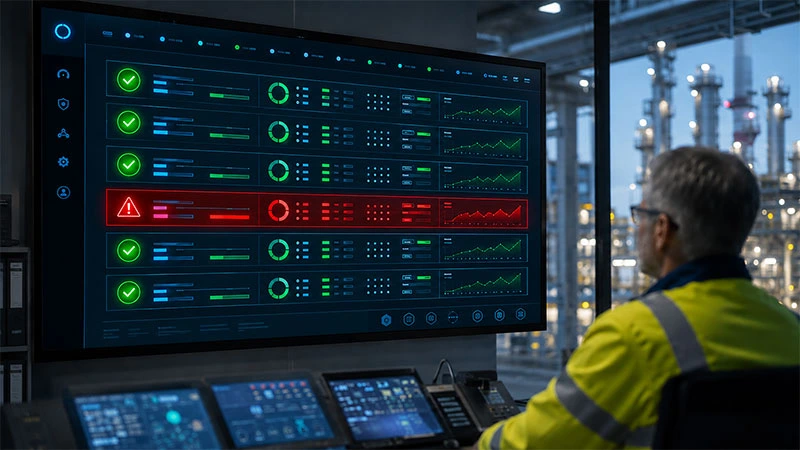
Often, long and confusing reports end up being more of a burden than a help. With automation, you can create dynamic and customized reports that bring the most relevant information in real time. Monitoring becomes constant, with automated systems and instant alerts about irregularities, allowing the team to react before a problem escalates.
When a problem is detected while conducting the inspection, the team can act immediately, preventing small issues from becoming big headaches. Having reliable data in hand empowers the team to make fast and informed decisions.
Imagine a platform that centralizes information, allowing you to plan and execute your safety checks without the burden of paperwork. GEEQUIP was designed for this. With technology, you can look at historical data and identify which areas, machines, or equipment really need more attention.
A safer and more efficient future
Safety inspections are transforming. With automation, data becomes more reliable and monitoring more proactive. The result is an environment where safety is not just an obligation, but a core value shared by all.
Your company can enjoy innovations that transform your workplace into a safer and more collaborative space.
Want to experience the benefits of automation for 15 days? Sign up and request your free trial!