

Work Permit

Understand what a Work Permit (PT) is, which NR standards require it, and how to monitor it efficiently. Optimize your management and avoid risks. Learn more!
By:
Guilherme Herker
Ensuring that high-risk activities are executed with maximum safety is one of the greatest challenges in the field of Occupational Health and Safety (OHS). In this context, the Work Permit (WP), also known as Work Permit (WP), is the most important document for risk control.
But how can you ensure that these permits are issued correctly and monitored efficiently? In this complete guide, we will cover everything you need to know: from the basic concept of the WP and the Regulatory Standards (NRs) that require it, to how technology can revolutionize its management.
What is a Work Permit (WP) and what is its purpose?
A Work Permit (WP) is a formal document with a limited validity period that authorizes the execution of a non-routine activity that presents significant risks to the health and safety of workers. Its main purpose is not to create bureaucracy, but rather to ensure detailed safety planning before starting the task.
It function as a final checklist that ensures that all risks have been identified and analyzed; that the necessary control measures (such as area isolation, use of specific PPE, etc.) have been implemented; that the entire team involved is aware of the hazards and safety procedures; and that formal authorization has been granted by a responsible supervisor. In short, the WP is the documented guarantee that a hazardous job has been planned and cleared to be performed with the maximum possible safety.
Why is monitoring important?
Work permits ensure that all activities carried out comply with regulatory standards so that they can be developed. The WP is required by law in several NRs from the Ministry of Labour and Employment. Some of the NRs that require a WP in certain situations are:

It is important to consult the specific NR for the activity you wish to perform to verify if a WP is mandatory. Check it in detail by accessing the Ministry of Labour and Employment clicking here.
With technological advancements, an EHS team can currently have total control over all employee documentation without needing physical storage space, being able to search and easily find files, with a reduction in the hours demanded for each process or activity.
The digitalization of the Work Permit is a game-changer in the EHS routine reality, making room for strategic analysis and increased productivity. The difference in eliminating steps from the process is very evident in the digital process, which is due to the fact that the tool is ready and able to be a factor for optimization and productivity.
However, when a required permit is not issued or expires, the consequences are serious, including:
Risk of accidents: expired permits can result in unsafe activities.
Fines and penalties: companies that do not comply with regulatory standards may face legal sanctions.
Damage to reputation: failing to maintain compliance can affect the company's image before clients and partners.
Strategies for monitoring work permits
Use management software
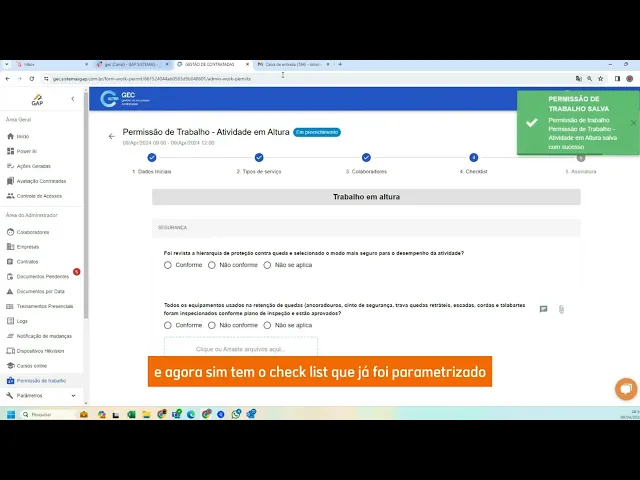
Automation is one of the best ways to manage permit expiration dates. WP management software allows the creation, management, and tracking of Work Permits online, facilitating access to information, reducing bureaucracy, and ensuring data security.
Train the team
Ensure that your team is well-trained regarding the importance of WPs and how to monitor them. This includes everything from creating permits to identifying when they need to be renewed.
Implement checklists
Checklists are a great way to ensure that all necessary steps are followed during the request and renewal process. A checklist can include:
Document review
Risk assessment
Authorization from responsible parties
Use alerts and notifications
Set up alerts in your management system so that your team receives notifications when permits are close to expiring. This helps to avoid surprises and ensures that renewals are made in a timely manner.
Conclusion
Efficient monitoring of work permit expirations is crucial for your company's safety and compliance. By implementing management software, establishing a review schedule, and training your team, you will be on the right track to guarantee a safer work environment. In short, the transition to the digital work permit is an essential step for any company looking to optimize its processes and ensure the safety of its employees.
👉 If you want to know more about how GAP Sistemas can help implement and manage the Digital Work Permit, contact us and schedule a free consultation with our specialists.
We offer a 30-day free trial to prove in practice the productive effects of the Digital Work Permit in your routine: